








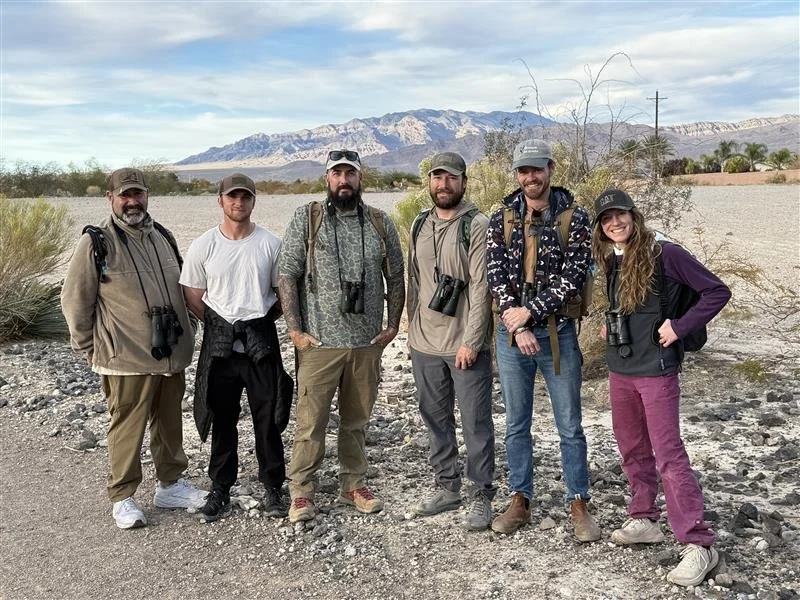
“This course makes avian identification incredibly approachable, and Alex is a fantastic field guide and instructor. I now feel equipped to tackle any identification challenges the field may pose.”
Course Description
This immersive, three-day applied training is designed for biological monitors, field biologists, and environmental consultants who wish to strengthen their avian identification and monitoring skills. Participants will gain practical field experience observing, identifying, and documenting birds across the Mojave Desert, with a focus on species commonly encountered during compliance monitoring and pre-construction surveys.
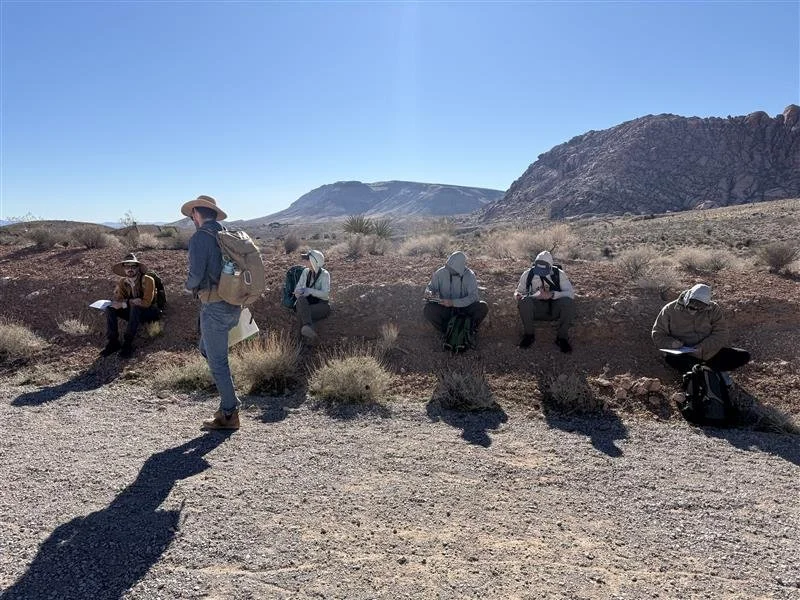
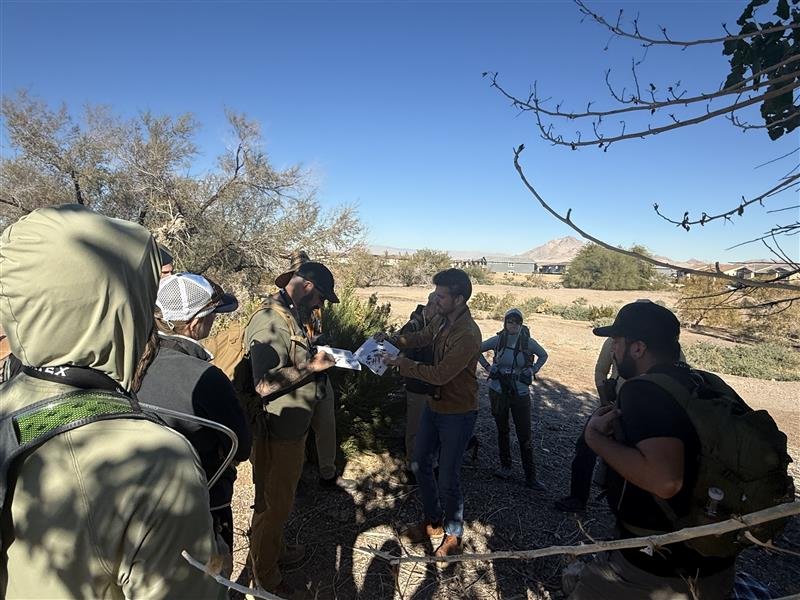
Through a blend of classroom instruction, guided field observation, and live point-count survey, attendees will learn to distinguish species by sight, sound, and behavior while developing field-ready competencies directly applicable to biological consulting work in California, Nevada and Arizona. Each day combines expert-led instruction with field practice at diverse desert habitats around Las Vegas. Participants will engage in reflective observation, note-taking, and applied exercises that connect bird ecology with the realities of compliance work in the Mojave.
Hosted by
Desert Shield Environmental Professionals in partnership with Alex Harper, Nature in Mind (see PDF download above for instructor profile).
Dates
Saturday April 25, 2026 - Monday April 27th, 2026
Location
The course will be based out of Las Vegas and will include 3 days of interactive field trips to various locations in the surrounding desert. Daily carpooling will be arranged. Field sites include:
Henderson Bird Viewing Preserve
Floyd Lamb Park (TBD based on permits and conditions)
Rainbow Owl Preserve – Gilcrease Orchard
Desert-scrub field site TBD (Potentially: Searchlight, Kraft Mountain, Avi kwa ami)
“As an experienced Biological Monitor I never know how to get started learning about new species or topics. I appreciate how Alex shared his bird knowledge in a digestible format for a beginner and how Caitlin offered a great professional perspective. I look forward to more courses in the future!”
Course Objectives
By the end of this course, participants will be able to:
Interpret avian flight behavior to recognize gliding, soaring, hunting, migrating, stooping, and display behaviors, particularly in raptors and territorial species.
Identify birds by sound, understanding how and why birds produce various vocalizations (alarm, chase, predator, song, contact, and mating/display calls).
Evaluate avian form and structure, including size, silhouette, and coloration patterns, and apply knowledge of bird topography (primaries, secondaries, tail feathers, coverts, etc.) for accurate species identification.
Assess habitat use through observation, recognizing behavioral cues that indicate foraging, nesting, roosting, or territorial use of an area.
Recognize and classify species by flight patterns and aerial silhouettes.
Develop local identification proficiency by learning to identify Mojave species such with protective status such as Crissal Thrasher, Loggerhead Shrike, Burrowing Owl (BUOW), and regional birds of prey.
Learn methods of and participate in a live point-count avian survey, gaining real-world experience in standardized avian monitoring methods directly relatable to consulting surveys.
Locate and identify Burrowing Owl (BUOW) burrows. Participants will also get to visit known active man-made BUOW burrows (While these burrows were previously active, status may change pending seasonal activity of the owls).
Foster continued learning and enthusiasm for field ornithology and applied avian science within the consulting profession.
Understand the role and responsibilities of biological monitors and surveyors in compliance with federal and state regulations (NEPA, CEQA, ESA, MBTA, CESA, and BLM/USFWS requirements).
Apply best management practices for minimizing disturbance and maintaining compliance in active construction zones.
Registration and Cancellation Policy
Cost
$625 per participant.
This contribution helps cover instructor time, permits, educational materials, and field resources to ensure a high-quality, hands-on training experience. A limited number of need-based or veteran scholarships are available.
Enrollment is limited to 10 participants to maintain an intimate, field-focused learning environment.
To reserve your spot, please register below with a brief note about your interest and commitment level. Registration confirmation and additional details will be provided upon acceptance into the course.
Cancellation
Payment is due at the time of registration. Cancellations made at least 30-days before the course start date will receive a full refund. No refunds are issued after that date; however, registration may be transferred to another attendee.
Intended Audience
• Entry-level biological monitors and field technicians and/or experienced biologists looking to gain a foundational baseline to build their birding abilities.
• Environmental science students and graduates.
• Veterans and transitioning professionals seeking careers in environmental compliance.
• Partner agency, park staff, and others seeking refresher training in avian field surveying.
Course Agenda
Please note that session timing and agenda items may vary by course and seasonality. This outline is intended as a general overview of the topics to be covered. For additional information, please contact aviantraining@desert-shield.co
-
Location: Henderson Bird Viewing Preserve Focus: Fundamentals of avian identification and the regulatory framework guiding biological monitoring in the Mojave Desert.
Time: Saturday, December 13 · 7:00 a.m.–2:00 p.m. (approx.)
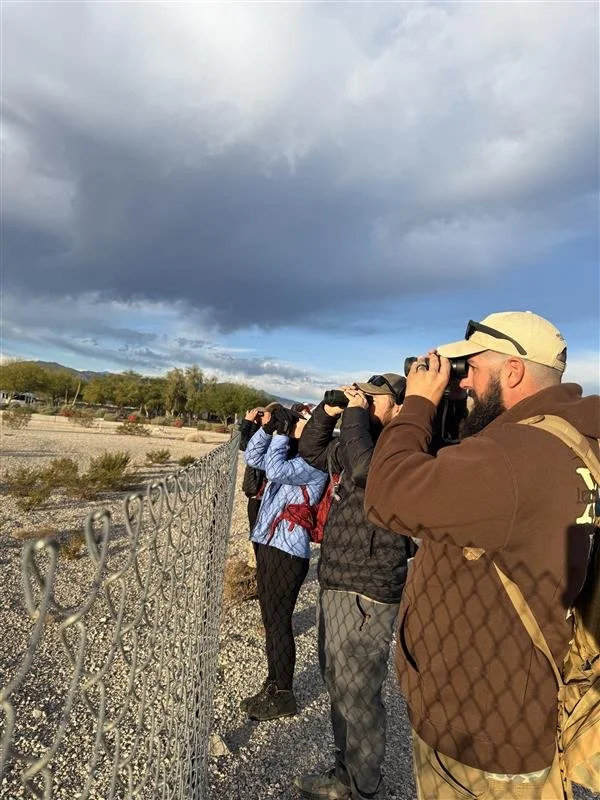
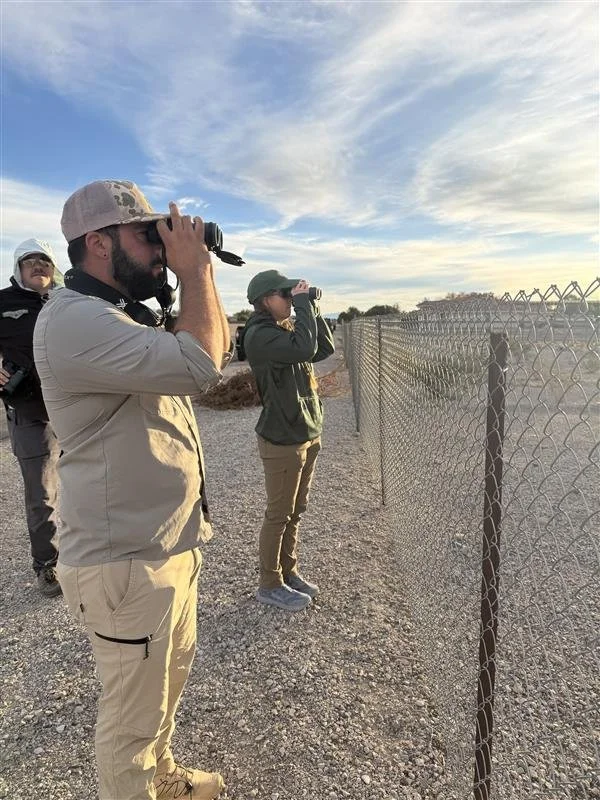
Participants meet at 7:00 a.m. for introductions, safety briefings, and orientation. After signing waivers and reviewing objectives, the group will spend the morning birding across the ponds and desert edges of the preserve. Instruction emphasizes recognizing species by shape, size, color, and movement, while learning efficient use of binoculars and field optics.
Short teaching pauses will introduce feather tracts, silhouette recognition, and terminology for describing flight and behavior. Participants will record their observations in personal field journals. (Desert Shield plans to provide each participant with a small journal and pencil set as a welcome gift, final confirmation pending.)
After a mid-day break, instruction shifts to the regulatory foundations of avian monitoring. Participants review the Endangered Species Act, Migratory Bird Treaty Act, and National Environmental Policy Act, exploring how these laws shape biological monitoring under BLM and USFWS authorizations. The afternoon concludes with a writing exercise: composing short field summaries and mock daily monitoring notes suitable for compliance documentation.
By the end of Day 1, participants will be able to:
• Identify at least ten common Mojave bird species by sight and field marks.
• Describe major feather groups and diagnostic features.
• Explain the professional responsibilities of biological monitors.
• Maintain organized, defensible field notes.
Lunch will take place on-site or at a nearby shaded area. Participants are encouraged to bring their own food; shared items or light refreshments may be provided. A 30-minute post-lunch rest or meditation period will allow time to digest and recharge before resuming discussion.
-
Location: Floyd Lamb Park at Tule Springs
Focus: Raptor identification and BUOW habitat assessments, habitat assessment practicum Time: Sunday, December 14 · 7:00 a.m.–3:30 p.m. (approx.)
The second day begins with a short safety meeting and habitat orientation, beginning at the Rainbow Owl Preserve. The morning focuses on bird identification skills and behavioral interpretation, with a strong emphasis on raptor recognition. Participants will observe and describe species such as Cooper’s Hawk, Sharp-shinned Hawk, Red-tailed Hawk, Northern Harrier, Red-shouldered Hawk, American Kestrel, and Peregrine Falcon, along with waterfowl, woodpeckers, and songbirds encountered in adjacent habitats.
Instruction emphasizes interpreting and describing flight behaviors, gliding, hovering, kiting, stooping, and displays, and translating those observations into professional field language.
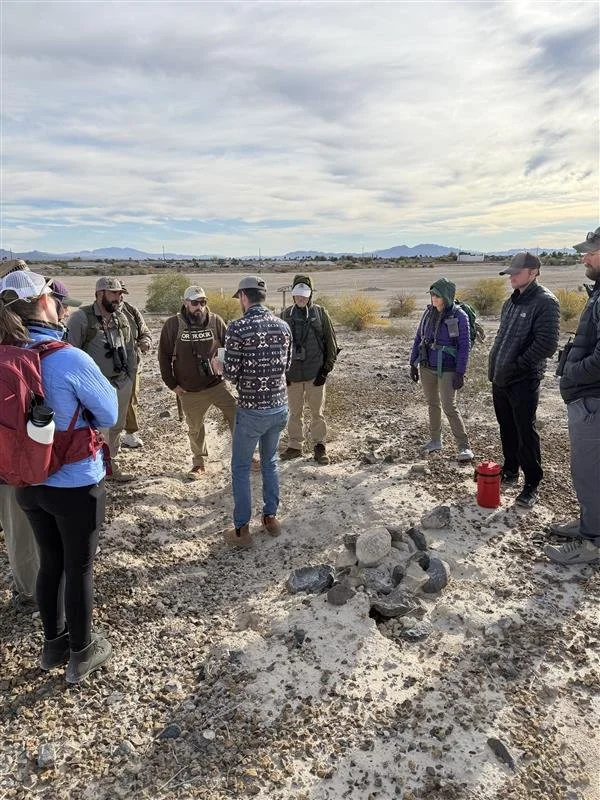
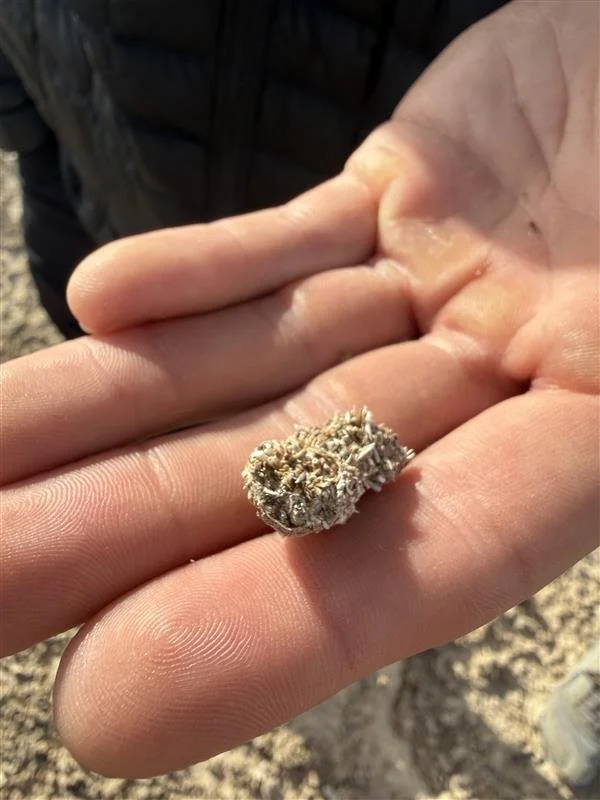
Late morning transitions into Burrowing Owl ecology and habitat observation. Participants will learn to locate burrows, identify signs of use, and understand mitigation and monitoring considerations.
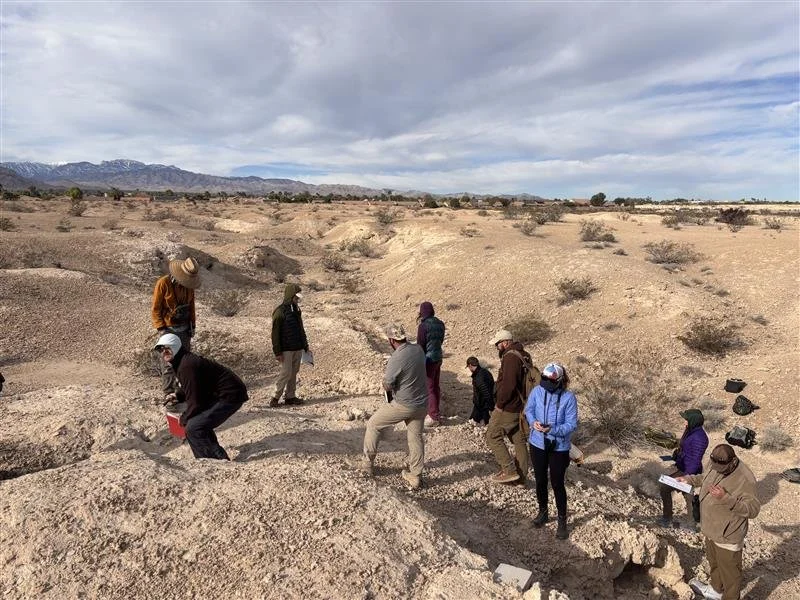
After lunch and a 30-minute rest period under shade, the group will conduct a habitat assessment practicum. Students classify vegetation structure, note disturbance factors, and record how birds use space for foraging or territorial activity. The day closes with a guided reflection linking behavioral observation to ecological assessment and compliance documentation.
By the end of Day 2, participants will be able to:
• Identify raptors and other common desert birds by sight and flight behavior.
• Interpret behavioral cues related to foraging, territory, and display.
• Locate and assess Burrowing Owl burrows.
• Conduct a basic habitat assessment using standardized notes and GPS coordinates.
-
Location: Desert-scrub field site (TBD based on permits and conditions)
Focus: Learn methods of and execute a point-count survey using skills acquired in the course
Time: Monday, December 15 · 7:00 a.m.–3:30 p.m. (approx.)
The final day brings all skills together in a true field-survey setting. The morning will be dedicated to standardized point-count surveys within open desert-scrub habitat. Participants will rotate through observer and recorder roles, practicing timed counts and documenting both visual and auditory detections. Instruction will cover distance estimation, detection bias, and maintaining consistent data quality.
Following a field debrief and lunch break, with another short rest period for reflection, the afternoon will simulate an applied compliance scenario, such as a “stop-work” event when a protected bird is observed. This exercise reinforces clear communication, safety, and proper documentation procedures.
The final session focuses on compiling data into short professional summaries and reflecting on lessons learned. Certificates of Completion will be distributed before adjournment.
By the end of Day 3, participants will be able to:
• Conduct avian point counts following recognized agency protocols.
• Identify birds by sight and sound in winter desert conditions.
• Demonstrate accurate, defensible data recording.
• Connect behavioral and habitat observations to compliance deliverables.
“Highly recommend the 3-day avian workshop and I’m looking forward to more courses with Alex! His knowledge was evident and he provided instruction in an easy to absorb way and reinforced with great tips and tricks throughout the course.”
Outcome & Certification:
Participants who complete the 3-day course will receive a Certificate of Completion in Introduction to Avian Field Identification and Monitoring Techniques, recognizing foundational proficiency in:
• Identifying bird by sound, flight, form and structure
• Avian habitat assessment foundations
• Burrowing owl burrow identification and habitat assessments
• Raptor identification species in the Mohave Desert
• Methods and field experience in avian point count surveys and data collection protocols
• Daily avian monitoring reporting essentials
• Roles and responsibilities of biologists in compliance with federal and state regulations (NEPA, CEQA, ESA, MBTA, CESA, and BLM/USFWS)
Materials
Material provided: Field notebook, Pen, Avian Workbook (Copyright - Nature in Mind).
Students must bring: Binoculars, hat, sunscreen, water, lunches, pen/pencil, clipboard, backpack.
Photography & Media Release
By registering for and participating in this workshop, you acknowledge and agree that photographs and/or video may be taken during the event and may be used by Desert Shield for promotional, educational, and marketing purposes, including on websites, social media, and other materials, without compensation.
Workshop Registration
Pay for the course to register. Use your preferred contact email and phone number during check out to ensure we can reach you for further course information.
All Rights Reserved
All course content, materials, presentations, handouts, and the workshop agenda are the intellectual property of Desert Shield Environmental Professionals and its instructors. Unauthorized recording, reproduction, distribution, or use of any course materials—whether in whole or in part—is strictly prohibited without prior written consent. All rights reserved.