General Information
Description: An Intensive Applied Training in Pollinator Monitoring, Habitat Assessment, Regulatory Compliance, and Standardized Survey Protocols for environmental professionals.
Date: May 9th, 2026
Time: 7:00am-6:00pm
Location: We will carpool from Las Vegas and meet at Pahranagat National Wildlife Refuge. 1.5 hours north of Las Vegas (pending permit approvals).
Cost: $150 Per Participant
Transportation: Carpooling will be arranged.
Course Overview
This one-day field workshop provides applied training in pollinator habitat assessment and monarch monitoring using two standardized frameworks: the Pollinator Scorecard and the Integrated Monarch Monitoring Program (IMMP). Designed for biological monitors, field biologists, and environmental consultants, the course emphasizes defensible data collection, repeatable field methods, and compliance-ready reporting that can be immediately applied to consulting and rights-of-way projects.
These protocols are used by more than 20 federal and state agencies and dozens of NGOs. Both are accepted for compliance reporting under the Monarch Candidate Conservation Agreement with Assurances (Monarch CCAA) as well as for federal grant reporting and measuring habitat management outcomes on restoration projects.
Participants will establish survey plots, score habitat attributes, document threats and management opportunities, and implement IMMP field methods to quantify milkweed density, blooming plant frequency, monarch eggs and larvae, and adult monarch activity, while also evaluating habitat features that support native bees and bumble bees across working landscapes. Instruction integrates regulatory context—including the Monarch CCAA and related federal policy updates—with hands-on field application to ensure participants leave with practical, field-ready skills.
Upon completion, participants will receive a Monarch Joint Venture Certificate of Completion documenting proficiency in standardized pollinator monitoring, data submission, and reporting—providing tangible credentialing that can be used to demonstrate measurable habitat assessment capabilities to employers, clients, and agency reviewers.
Participants will also receive a curated digital resource folder and access to Monarch Joint Venture’s online learning platform, the NECTAR Hub (Network for Education on Conservation, Training, and Research).
Monarch Joint Venture / Instructor
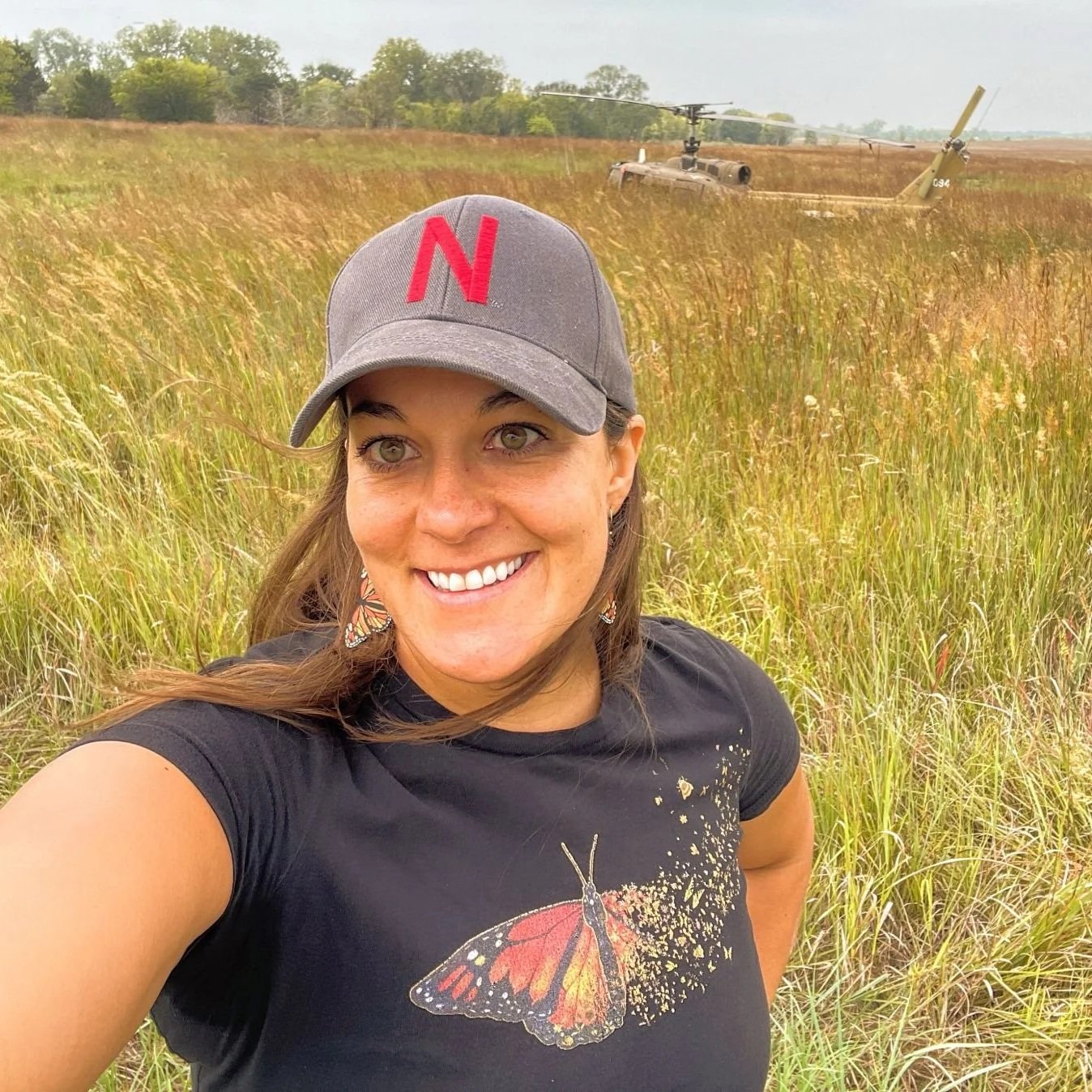
This course will be co-hosted by the Monarch Joint Venture (MJV). The MJV is a partnership of federal/state agencies, NGOs, businesses, and academic programs dedicated to protecting the North American monarch migration. Their mission is to conserve monarchs and their migration by coordinating science-based habitat restoration, education, and research across the U.S.
Mercy Manzanares will be instructing the course. She is a project manager with the MJV. More details can be found on her linkedIn: https://www.linkedin.com/in/mercymanzanares/
Agenda
0700-0900 - Carpool to field site
0900-0920 - Welcome and overview
0920-1000 - Monarch ESA listing updates, monarch CCAA, bumble bee CBA and proposed 4d rule discussion
1000-1045 - Monarchs and pollinators on rights-of-way: Pollinator ecology for ROW partners
1100 to 1200 - Introduction to bumble bee and native bee protocols and resources
1200-1300 - Lunch (bring your own lunch)
1300-1400 - Overview of ROW Pollinator Score Card, Monarch Monitoring Protocols and Integrated Monarch Monitoring Program (IMMP)
1400-1600 - Practice pollinator survey protocols in the field and habitat management tour and discussion
1600 - Conclusion and next steps
1630-1800 - Carpool to Vegas
Course Objectives
By the end of this workshop, participants will be able to:
Apply two standardized monitoring frameworks (Pollinator Scorecard and IMMP) to assess pollinator habitat condition and monarch use across multiple land-use types, including linear rights-of-way.
Design defensible sampling layouts by delineating an assessment area and distributing Pollinator Scorecard plots using random, systematic, or representative approaches appropriate to project goals.
Establish repeatable monitoring locations by setting up and documenting an IMMP plot so surveys can be replicated across seasons and years.
Conduct Pollinator Scorecard Habitat Assessments by completing Tier 1 or Tier 2 surveys in a 1,500 sq ft plot, including plot documentation, photo points, nectar plant cover estimates, milkweed presence or abundance, and notes on threats and opportunities.
Calculate and interpret habitat quality ratings and explain how tier selection affects field effort, data resolution, and reporting outputs.
Evaluate management compatibility by identifying manageable threats and available opportunities, then applying the Pollinator Scorecard management scoring logic to produce an overall rating.
Implement IMMP Activity 1 field methods using transects and 1 m² subplots (or census where appropriate) to quantify milkweed density and blooming plant frequency.
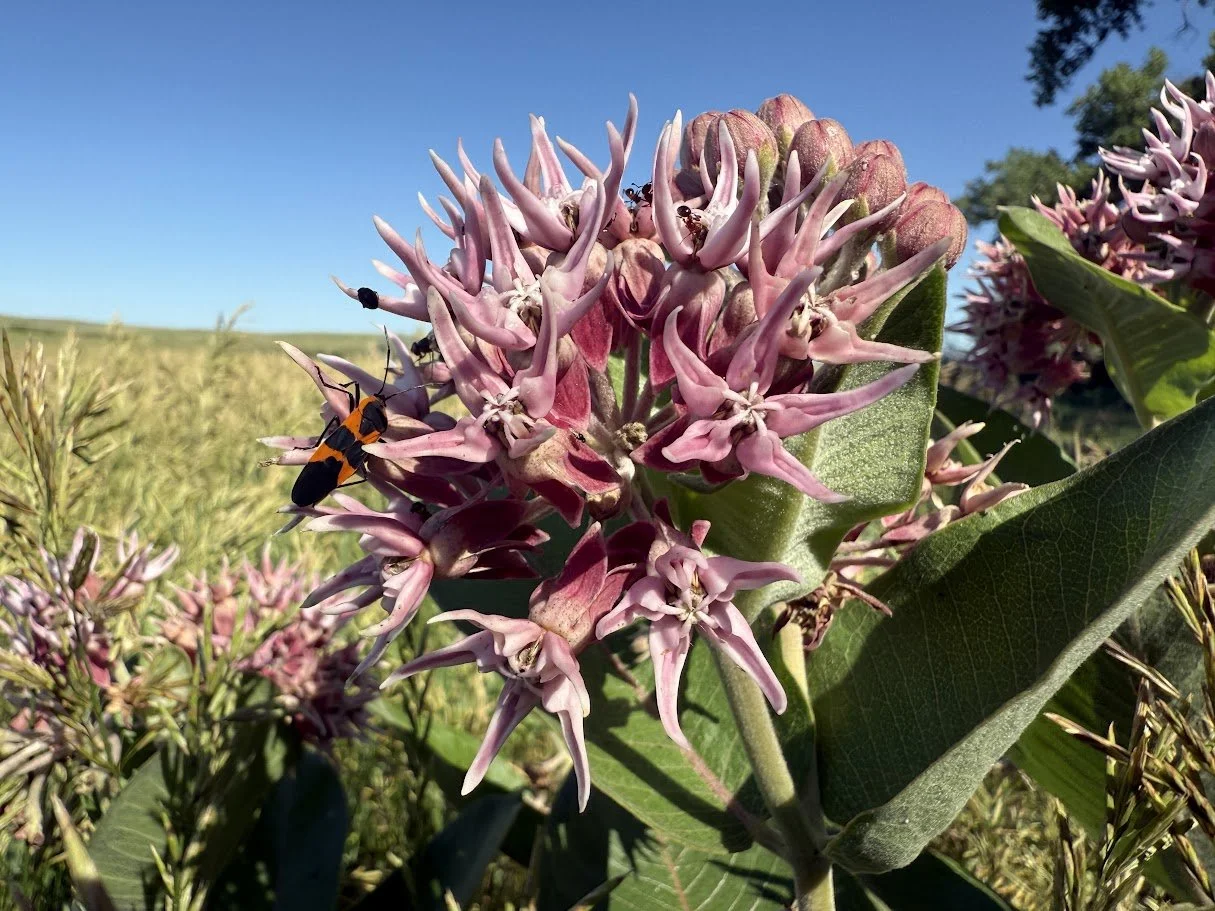
Conduct IMMP Activity 2 field methods by identifying regionally relevant milkweed species and detecting monarch eggs and larval instars to document monarch breeding-stage habitat use.
Implement IMMP Activity 3 field methods by conducting a modified Pollard walk under allowable survey conditions, while documenting adult monarch observations, behaviors, and nectar or oviposition plants.
Select the right tool for the job by distinguishing what each protocol is designed to answer (habitat condition and management suitability vs monarch habitat and use across life stages) and aligning methods to common consulting and ROW needs.
PLEASE NOTE: Please note that session timing and agenda items may vary by site conditions, weather, and seasonal monarch and pollinator activity. This outline is intended as a general overview of the topics to be covered.
Course Descriptions (Detailed)
-
Participants are encouraged to meet in Las Vegas and carpool, as there are limited spots at the refuge. We will meet at 7am to carpool in North Las Vegas.
We will meet in the classroom of the Pahranagat National Wildlife Refuge visitor center for our morning lessons.
Participants begin the day with introductions, safety briefings, and an overview of workshop objectives and logistics. The opening session establishes the course structure, clarifies expected field conditions and equipment needs, and frames the workshop around practical monitoring outputs that can be used for project decision-making and reporting.The morning then shifts into a regulatory and programmatic briefing. Instructors provide updates on monarch ESA listing status and discuss how regulatory direction and policy changes affect monitoring and documentation. This session also covers the Monarch Candidate Conservation Agreement with Assurances (CCAA), the bumble bee Conservation Benefit Agreement (CBA), and the proposed 4(d) rule, emphasizing how these tools intersect with compliance reporting, project planning, and risk reduction for land managers and consultants.
-
Following the compliance update, the workshop transitions into applied ecology for rights-of-way partners. Instruction focuses on how monarchs, bumble bees, and other pollinators use ROW landscapes, and how vegetation management influences nectar availability, larval host plants, nesting habitat, and overall habitat functionality. Discussion is grounded in common ROW constraints and operational realities, linking ecological principles to feasible management actions and measurable habitat outcomes.
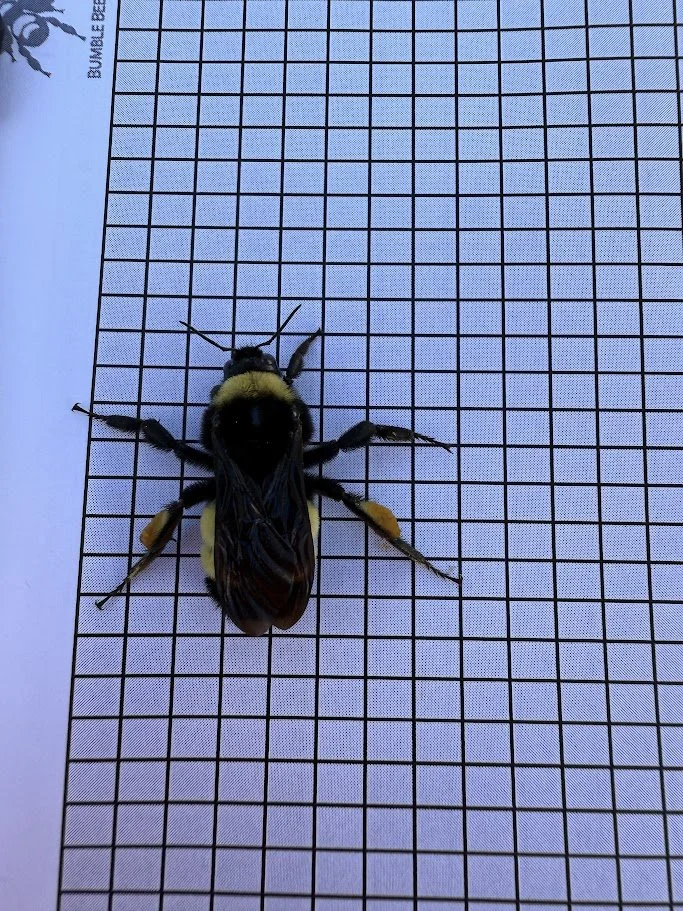
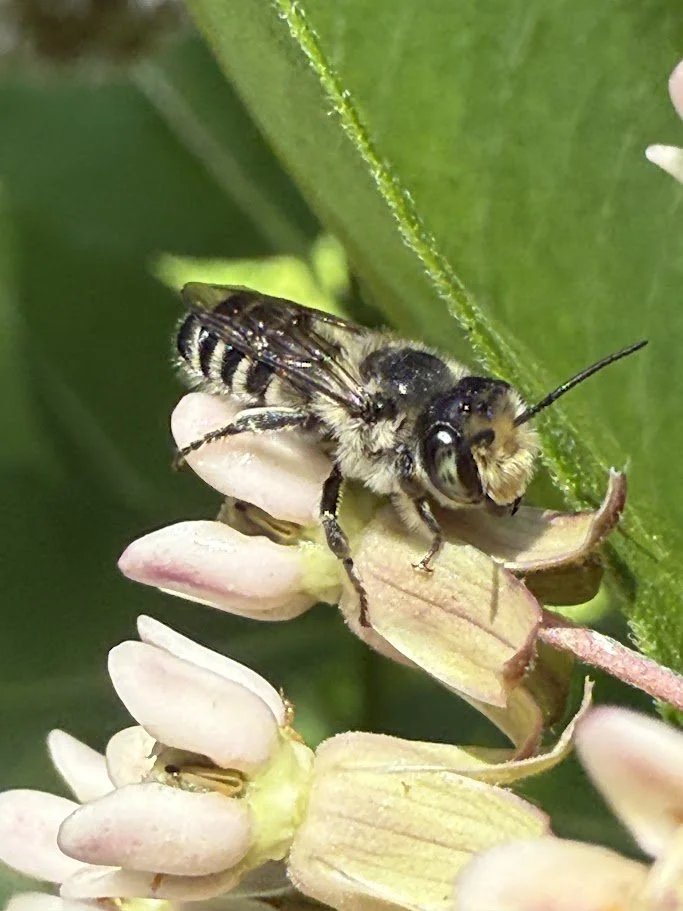
Mid-morning, participants are introduced to bumble bee and native bee monitoring protocols and resources. The session reviews core survey concepts, including standardization, detection considerations, and matching methods to objectives. Instructors highlight available tools and references that support consistent field identification and data collection, with a focus on how native bee and bumble bee information can complement habitat assessment and monarch monitoring.
Lunch will take place on-site or at a nearby shaded area. Participants must bring their own food as the location is remote and food options are limited.
After lunch, the afternoon begins with an integrated overview of the primary protocols used in the practicum. Instructors introduce the ROW Pollinator Scorecard, monarch monitoring protocols, and the Integrated Monarch Monitoring Program (IMMP), clarifying what each protocol is designed to measure and how they work together. Emphasis is placed on plot-based assessment, repeatability, and producing defensible outputs that translate directly into client-ready deliverables and compliance documentation.
-
The final two hours are conducted in the field through a structured, hands-on practicum and habitat management tour. Participants practice survey plot setup, complete habitat attribute scoring, and document threats and improvement opportunities, then apply standardized monitoring methods for milkweed and blooming plants, monarch eggs and larvae, and adult monarch activity. Instructors provide real-time coaching on field efficiency, consistency, and data quality, while connecting observations to management decisions and reporting needs.
The workshop closes with a brief conclusion and next steps. Participants review key takeaways, discuss common implementation pathways for their own sites, and identify how to maintain data quality and consistency over time through the MJV data portal. The session ends with guidance on how to move from field data to reporting products and actionable habitat management recommendations.
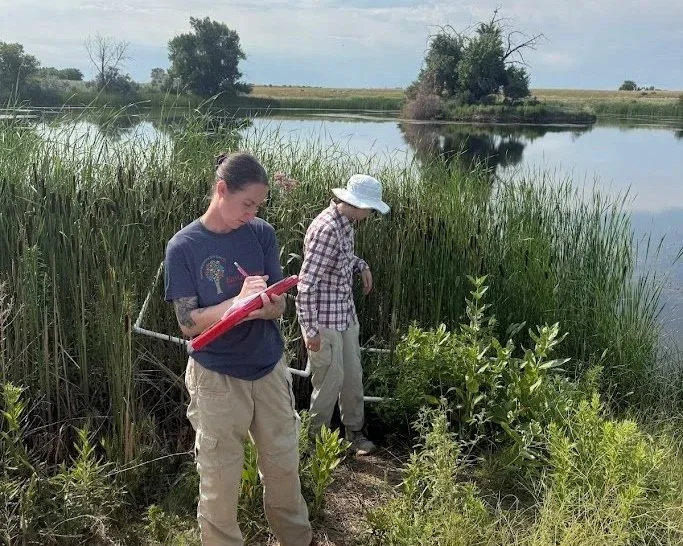
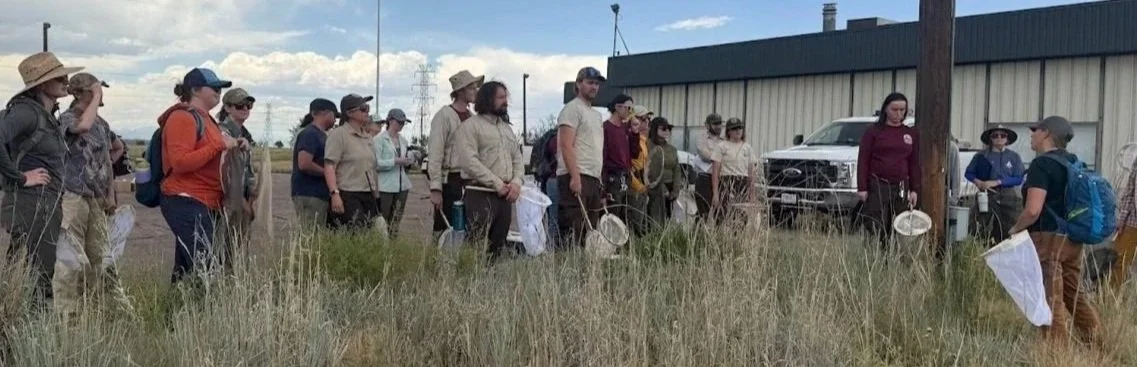
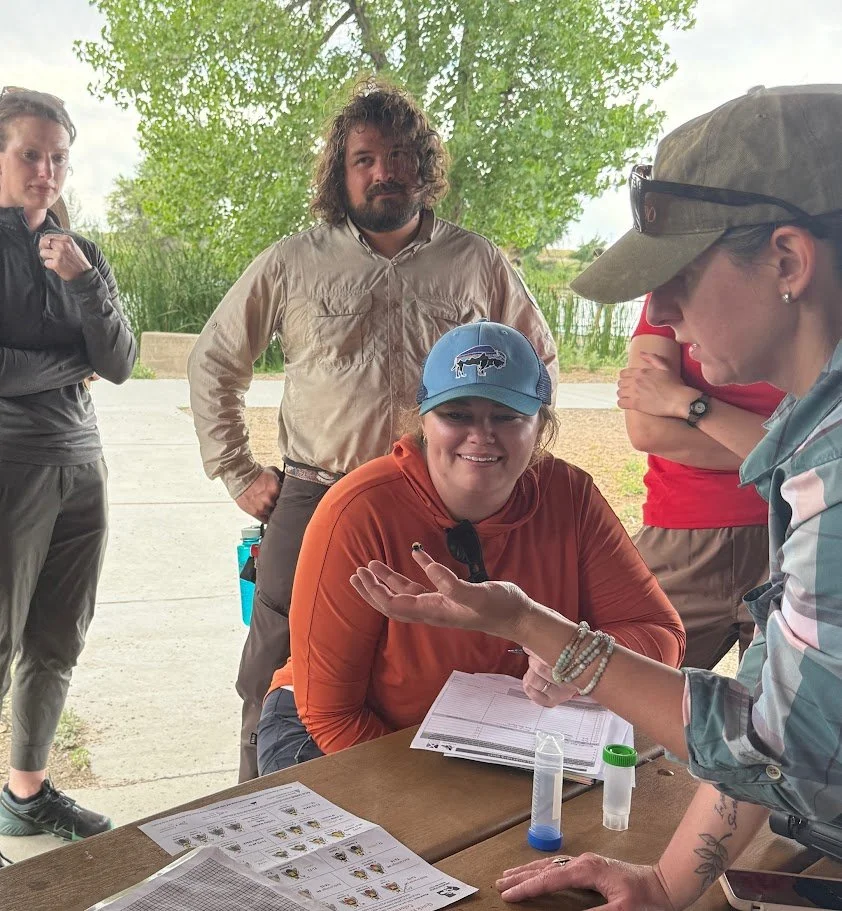
Students recording milkweed species found in their survey plot.
Intended Audience:
• Entry-level to skilled biological monitors and field technicians and/or biologists looking to gain a foundational baseline to build their pollinator monitoring abilities.
• Environmental science students and graduates.
• Veterans and transitioning professionals seeking careers in environmental compliance.
• Partner state and federal agency,and others seeking training in pollinator surveying.
Materials:
Materials provided:
Sample datasheets
Access to the MJV online learning platform (a $30.00 value):
Students must bring:
Hat, sunscreen, water, lunch, pen/pencil, clipboard, backpack, floral field guide, and any documents that you would like on-hand from the document folder found on the online learning platform.
Registration and Cost
The cost of the course is $150 per participant. Enrollment is limited by classroom size and to maintain an productive, field-focused learning environment.
This contribution helps cover instructor and organizer’s time, travel, permits, educational materials, and field resources to ensure a high-quality, hands-on training experience.
A limited number of veteran and student scholarships are available. If cost is a barrier please reach out to us for options.
Payment is due at the time of registration. Cancellations made at least 30-days before the course start date will receive a full refund. No refunds are issued after that date; however, registration may be transferred to another attendee chosen by the registrant.
To sign up: