

Inside Desert Shield’s April 2026 Avian Field Identification & Monitoring Techniques Workshop
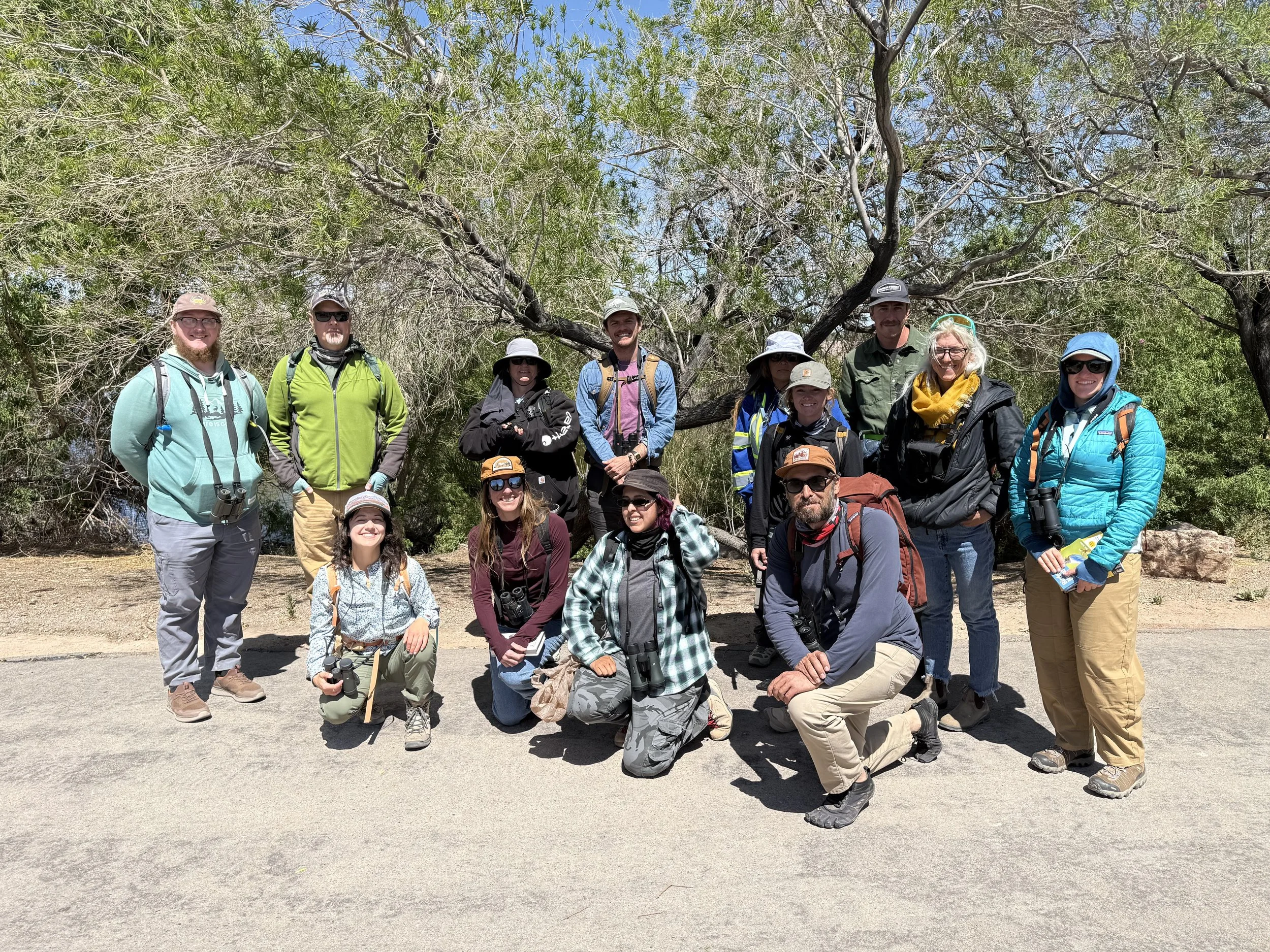
After the success of Desert Shield’s first Avian Field Identification & Monitoring Techniques workshop, it was clear there was a real need for more hands-on biological training in the Southwest.
In April, Desert Shield Environmental Professionals and Alex Harper of Nature in Mind expanded the program with two additional workshops held April 17 to 19 and April 25 to 27, 2026. These workshops gave participants ample time in the field, repetition with bird identification, and lots of practice connecting what they saw to biological monitoring work.
“This course makes avian identification incredibly approachable. I now feel equipped to tackle any identification challenges the field may pose.”
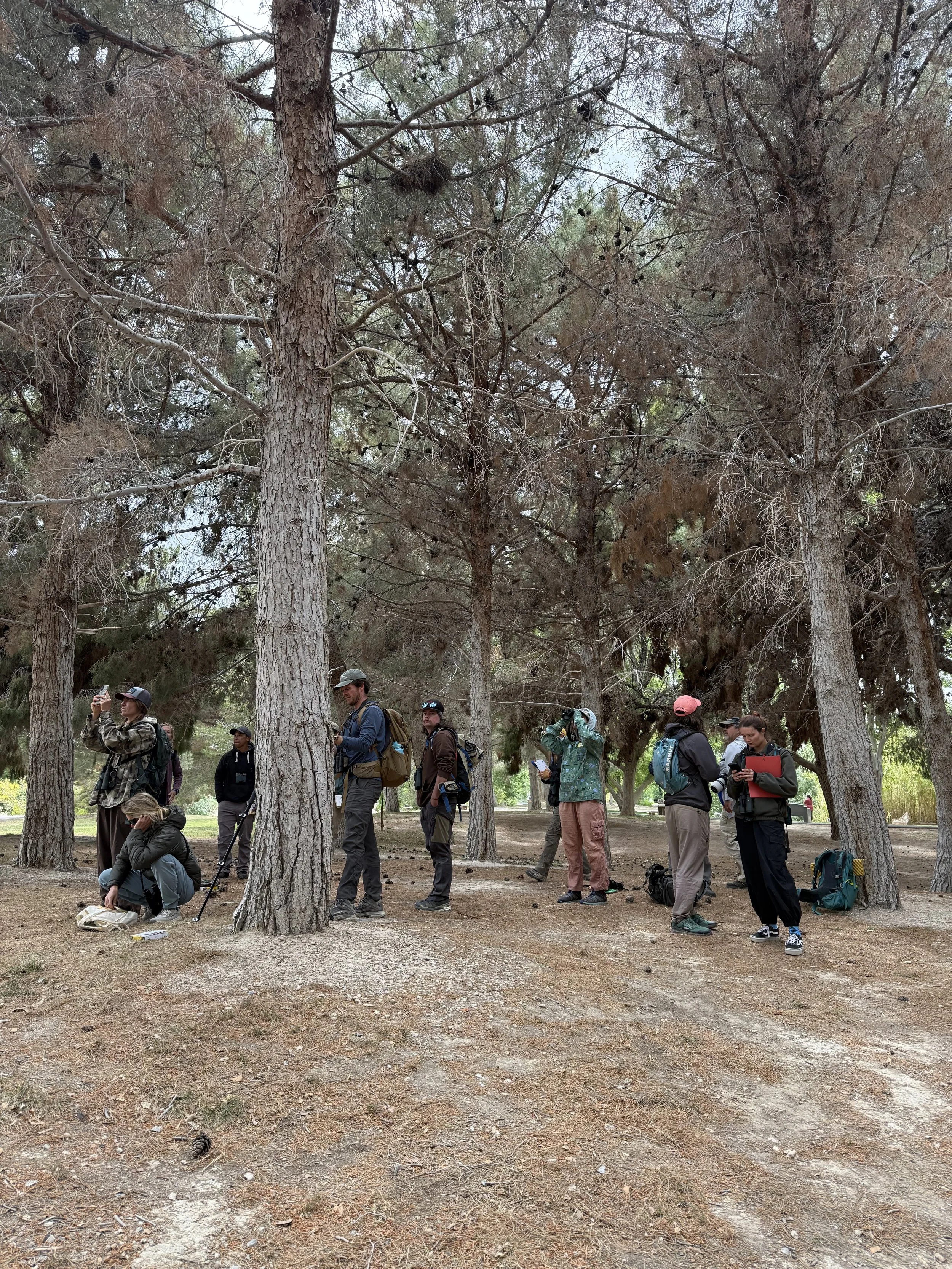
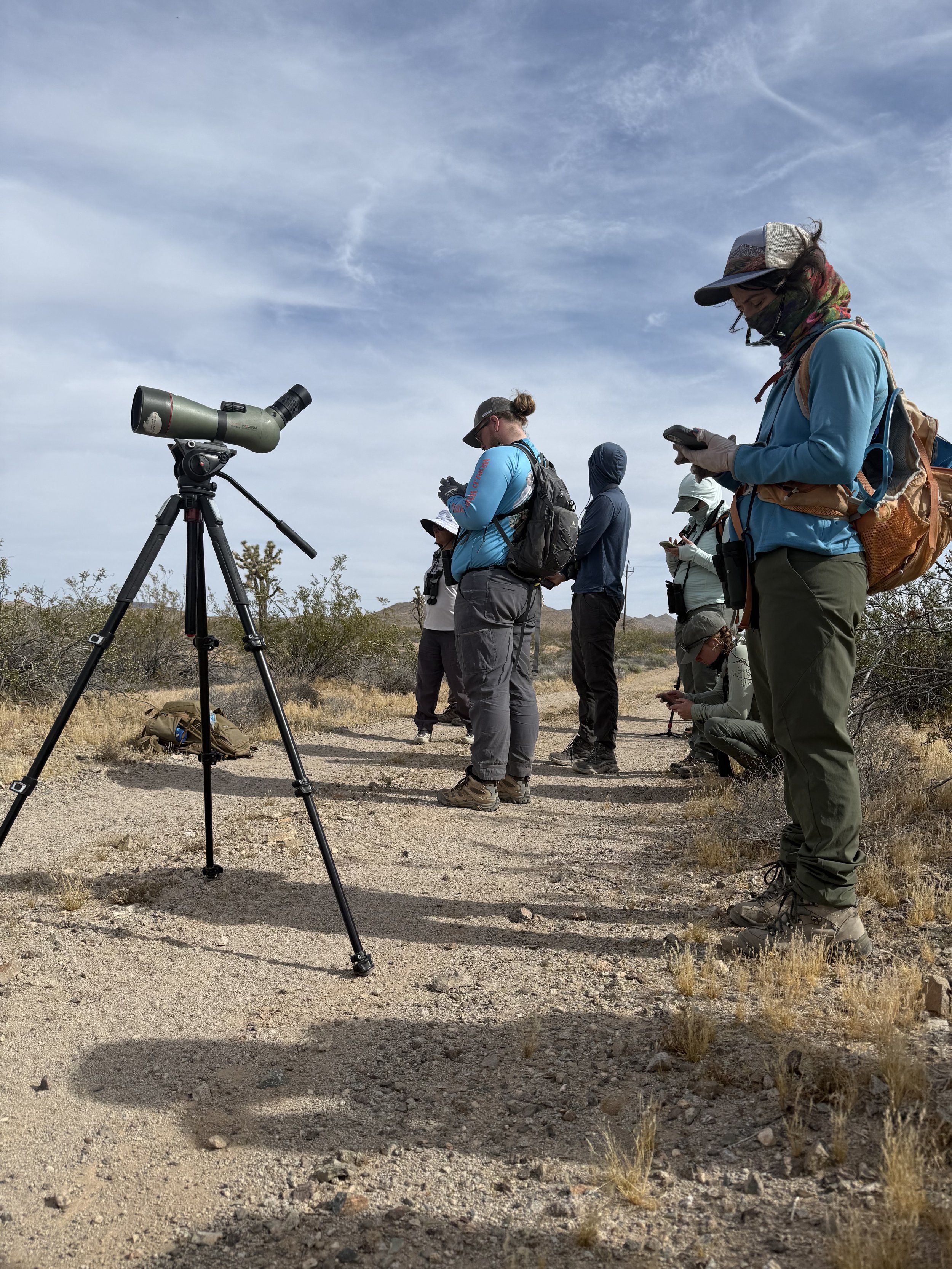
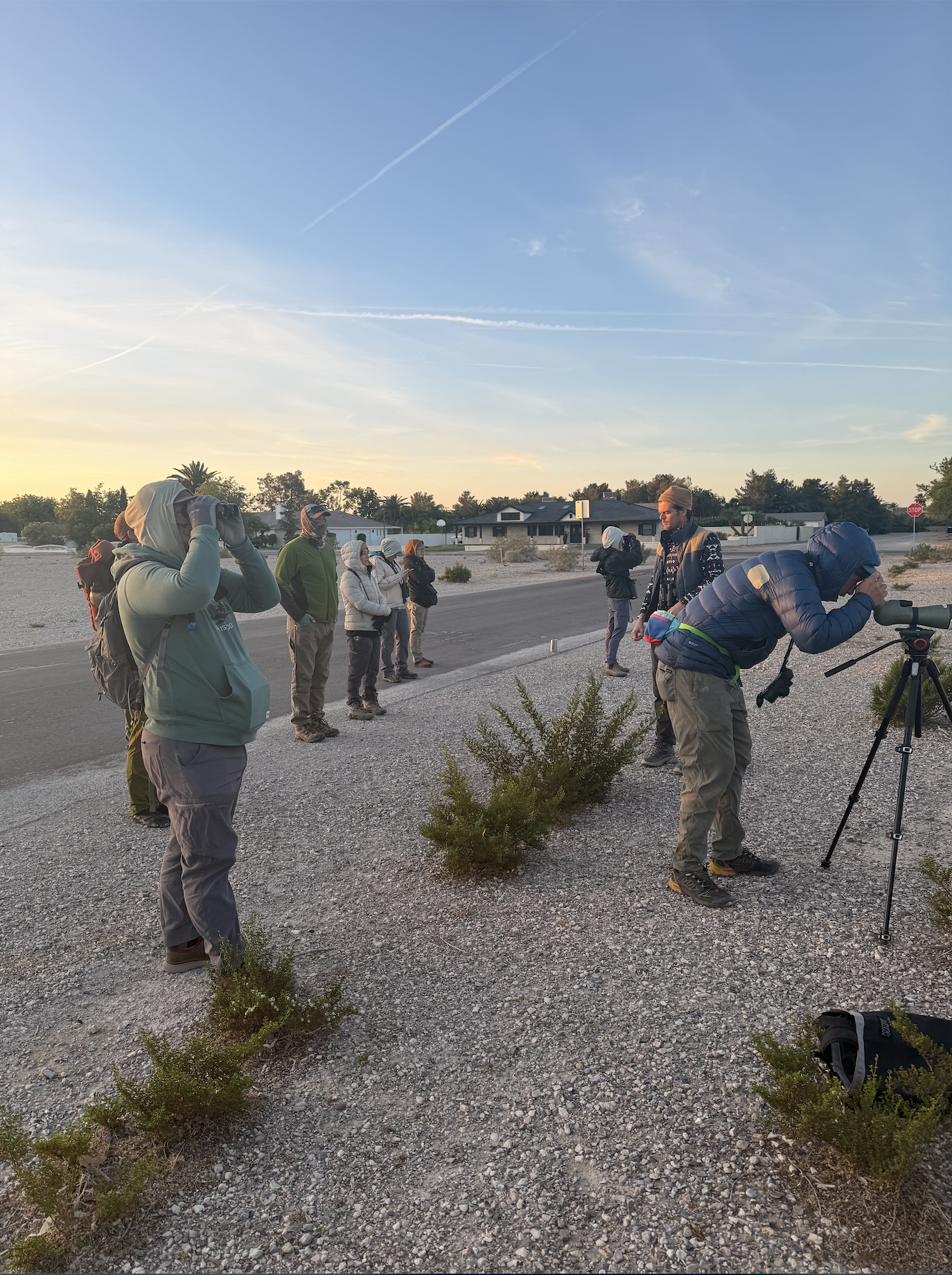
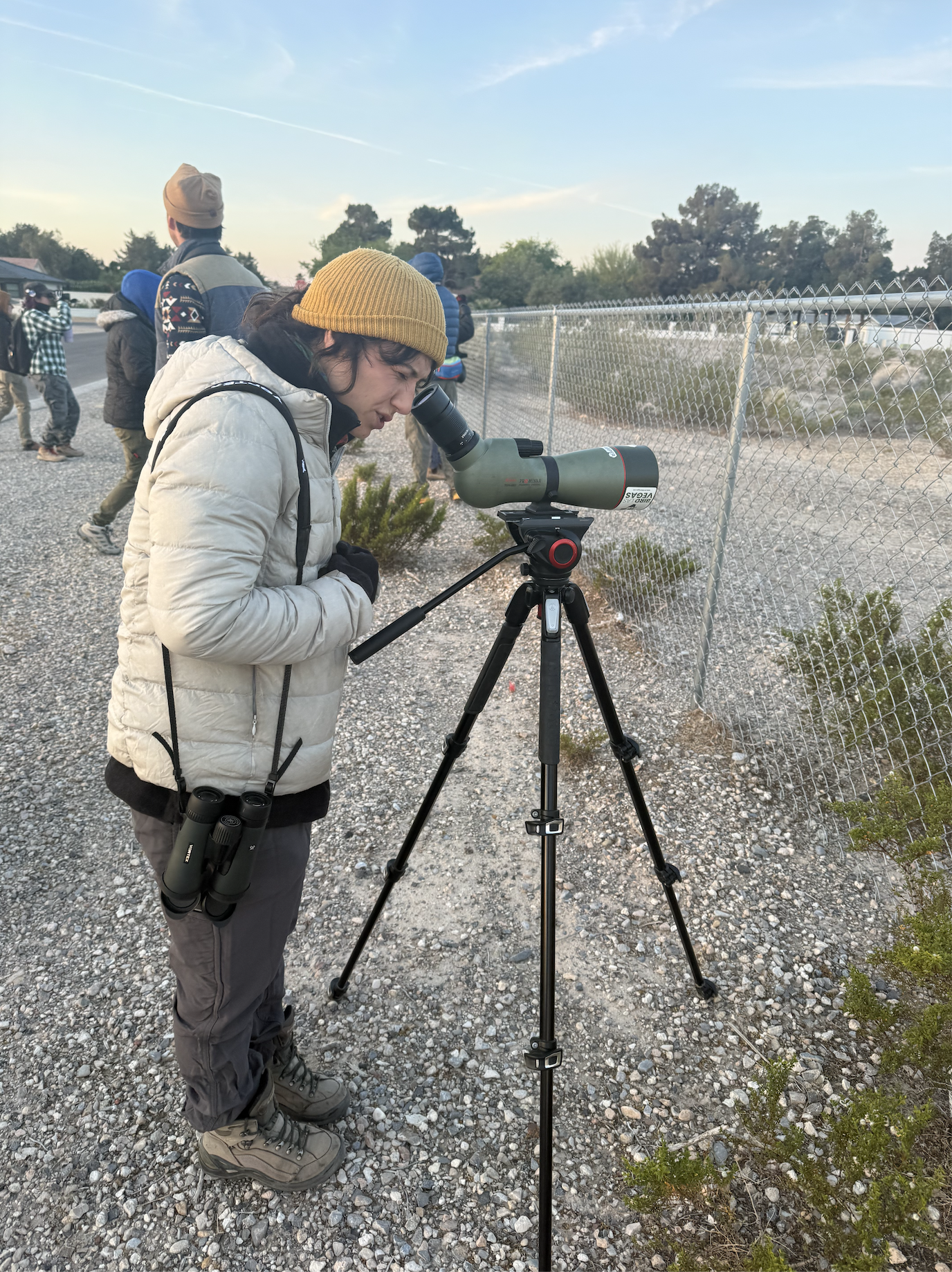
Learning how to identify birds in the field isn’t as easy as it sounds!
How often have you seen a bird in binoculars, was sure you knew what it looked like, so you opened your field guide (or app) and realized you forget (or didn’t observe) key details only to look up and realize the bird had flown away?
A major focus of the April workshops was learning how to identify birds using context clues before jumping to the merlin app or a smart search on a bird app.
Participants practiced how to look, listen, describe, document, and think through what they were seeing in the field. This involved key observation skills prior to searching in the field guide.
FIRST, we had participants get eyes on the bird for AS LONG AS POSSIBLE before looking in their field guide.
They were encouraged to answer the following questions to help guide their observations:
Size, is the bird sparrow-sized, mockingbird-sized, raven-sized, or eagle-sized?
Shape, is it round and compact, long and slender, upright, low to the ground, or heavy-bodied?
Beak, is the beak conical, curved, thick, thin, or tweezer-like?
Tail and legs, is the tail long or short compared to the body? Are the legs short and squatty, or long and obvious?
Color and field marks, what color are the beaks, legs, and feet? Is there an eye ring? Are there strong patterns or contrasts?
Behavior, is the bird hopping on the ground, moving through a shrub, calling from cover, soaring overhead, hunting, feeding, or returning to the same spot?
Sound, is the call long, short, sharp, buzzy, repeated, musical, or harsh?
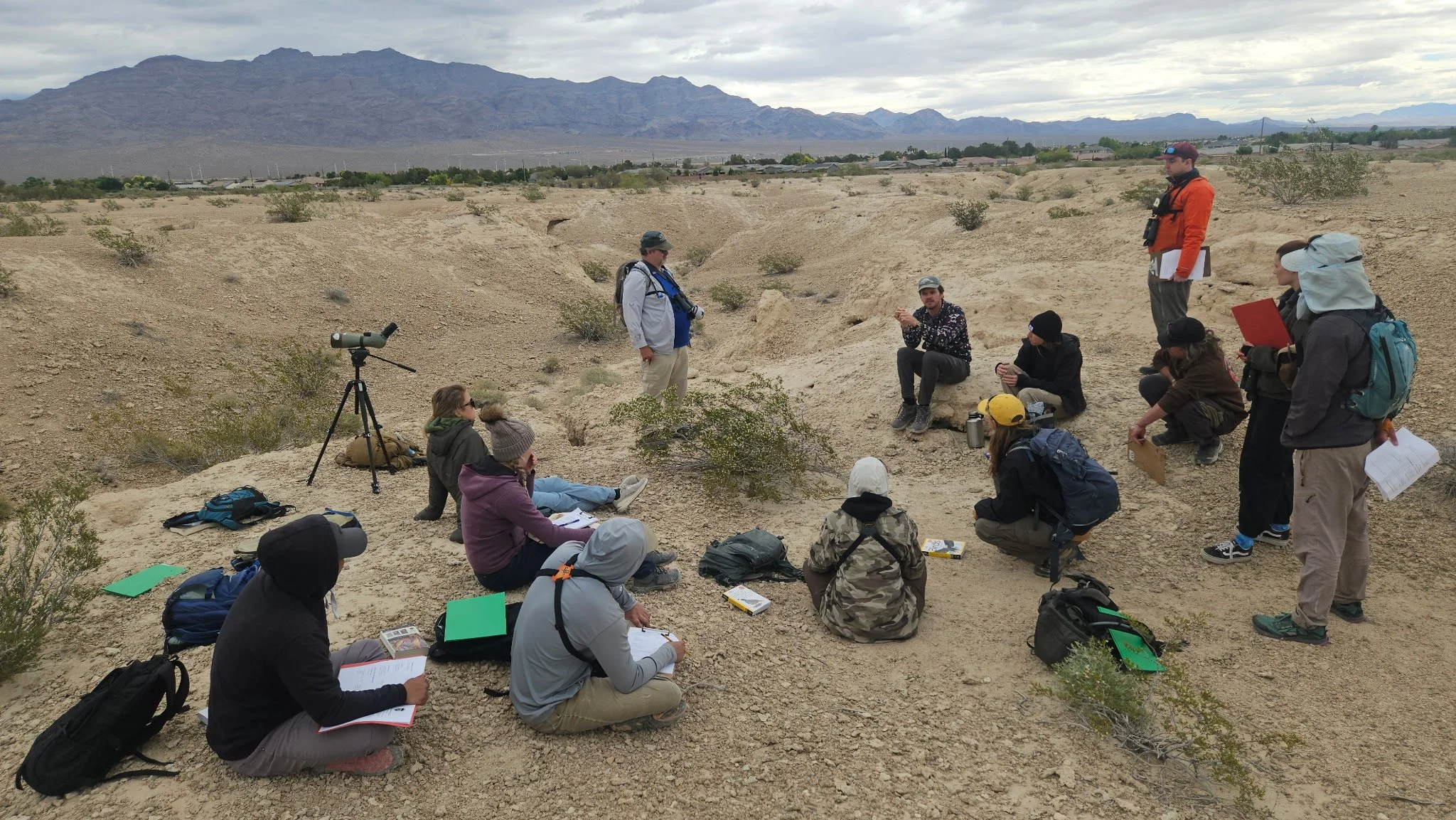
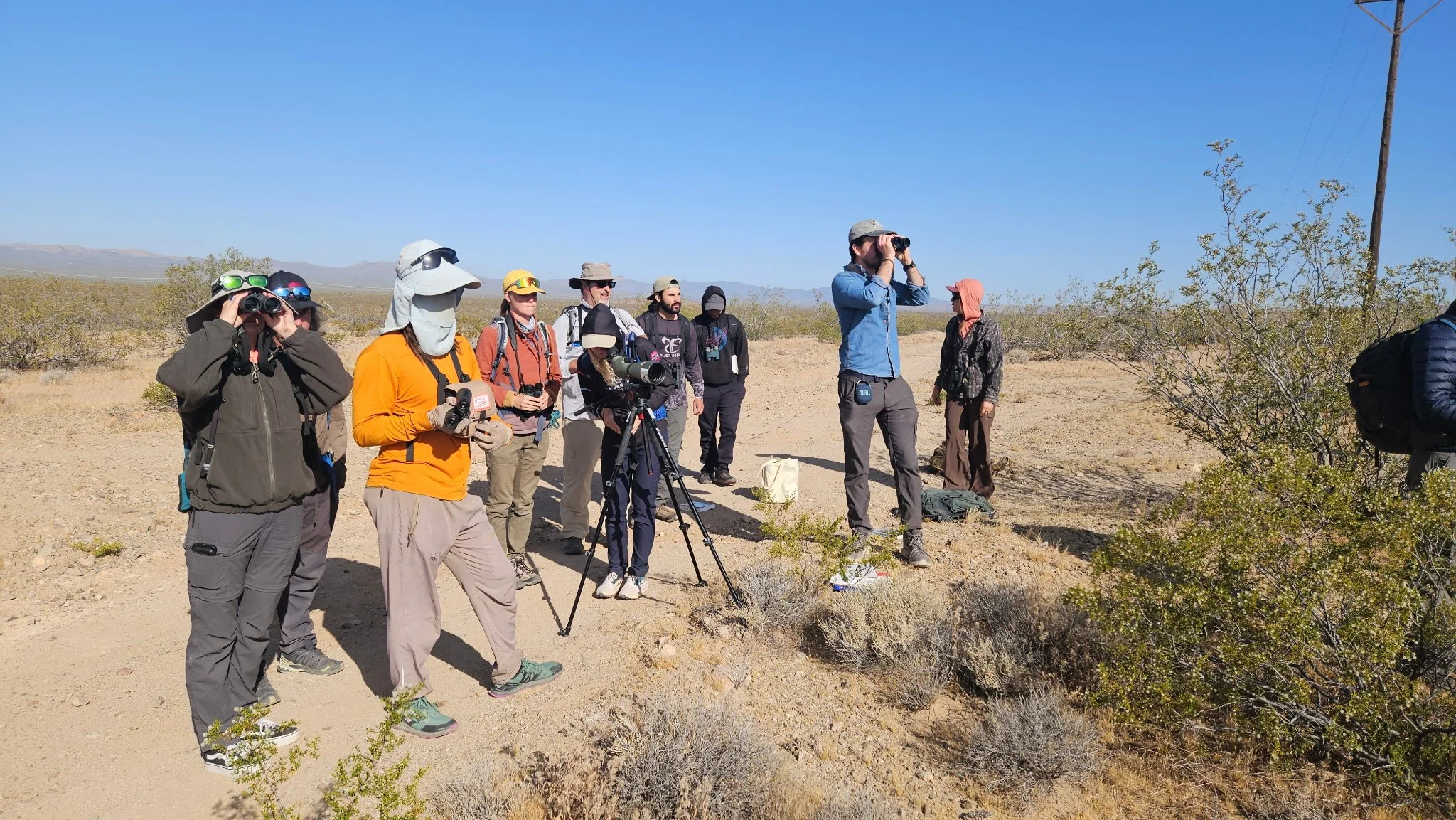
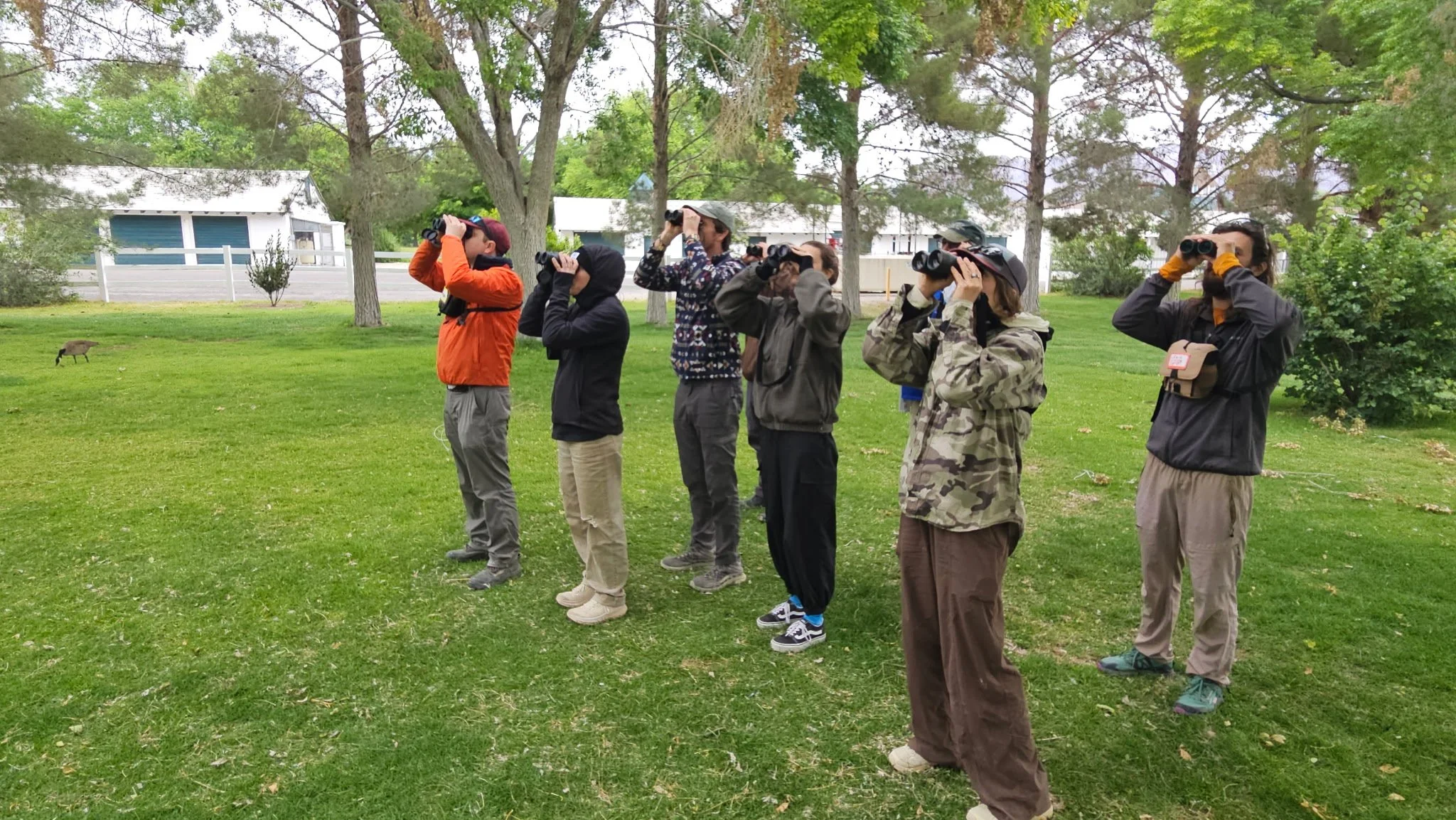
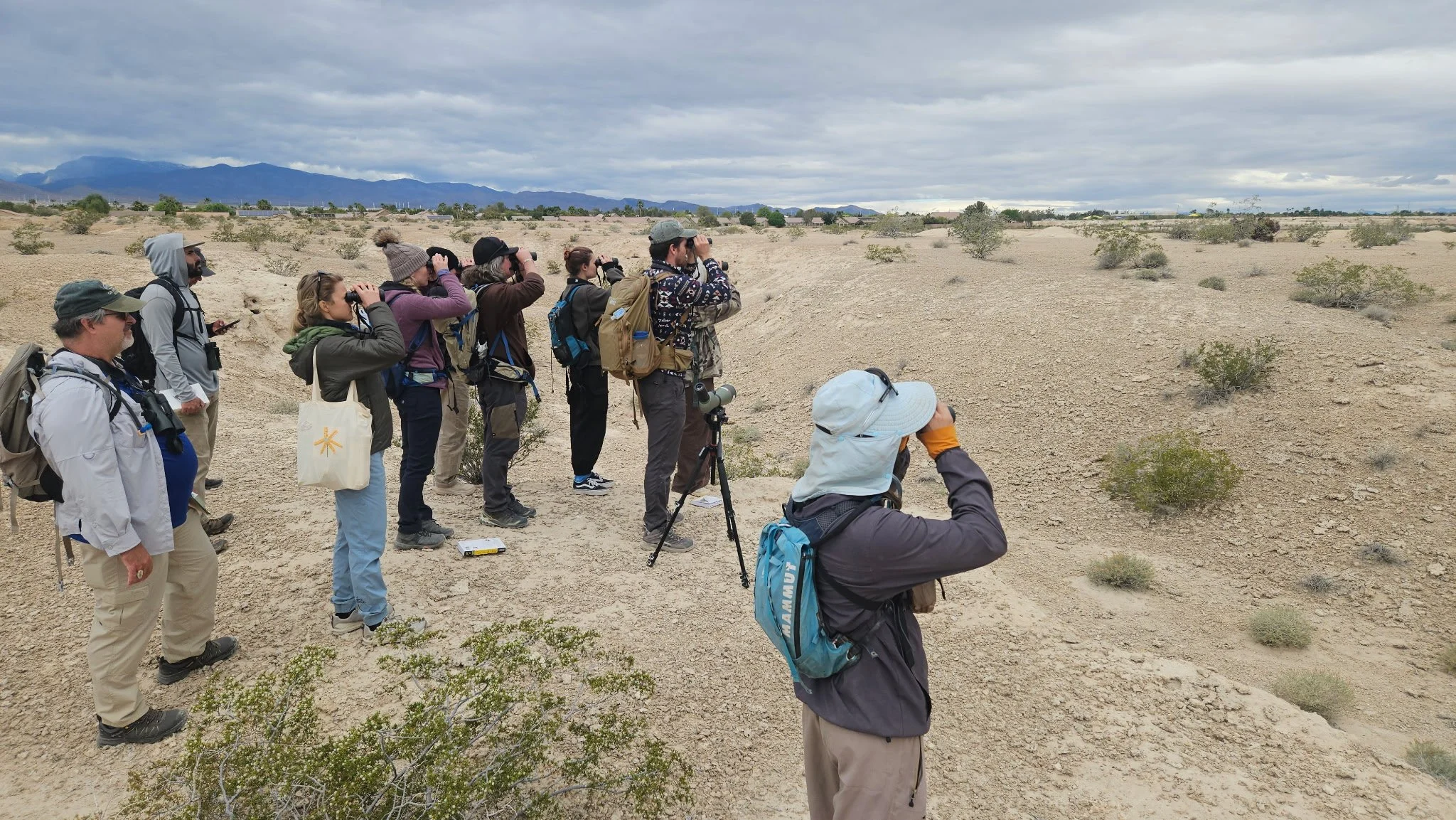
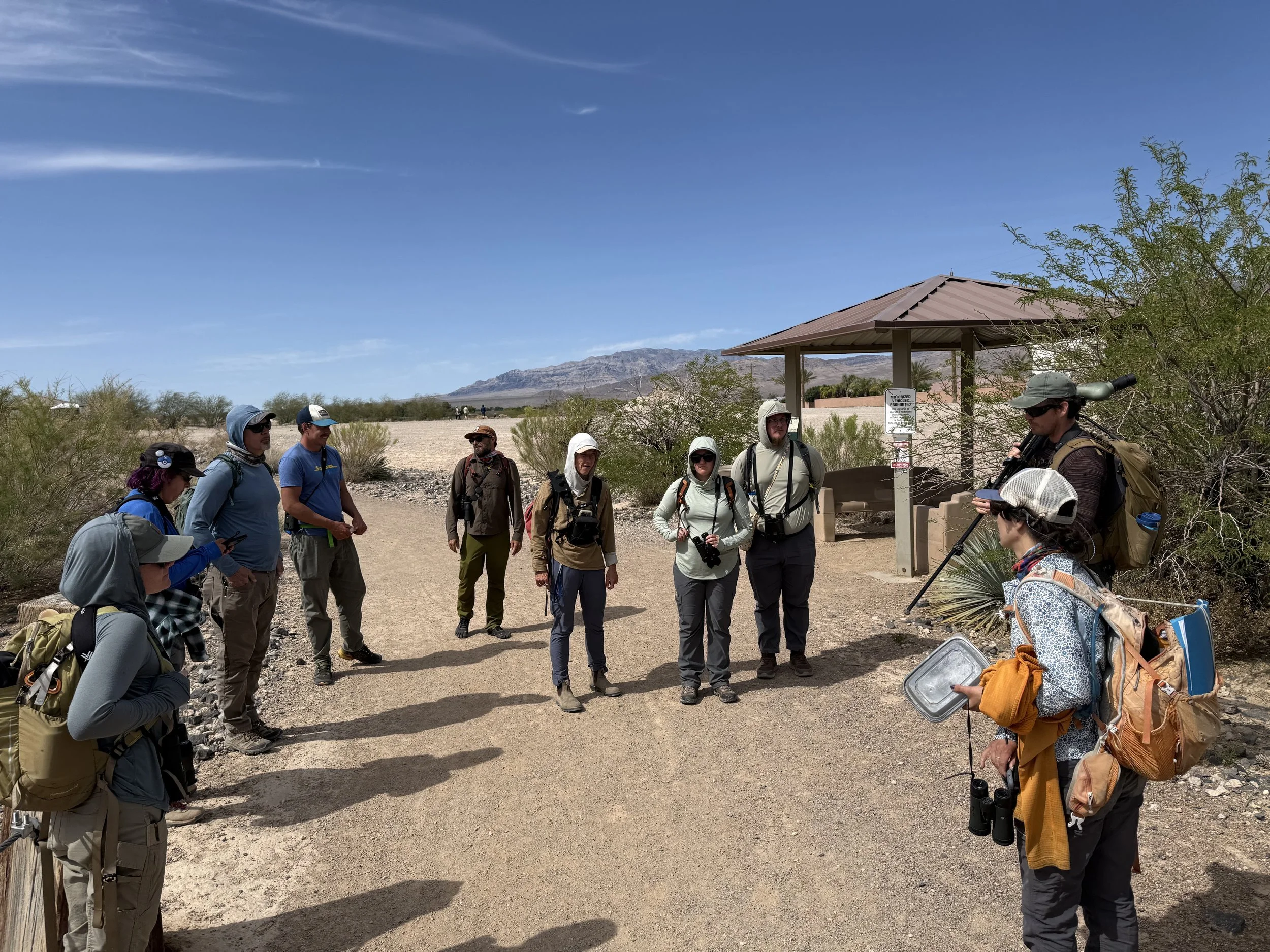
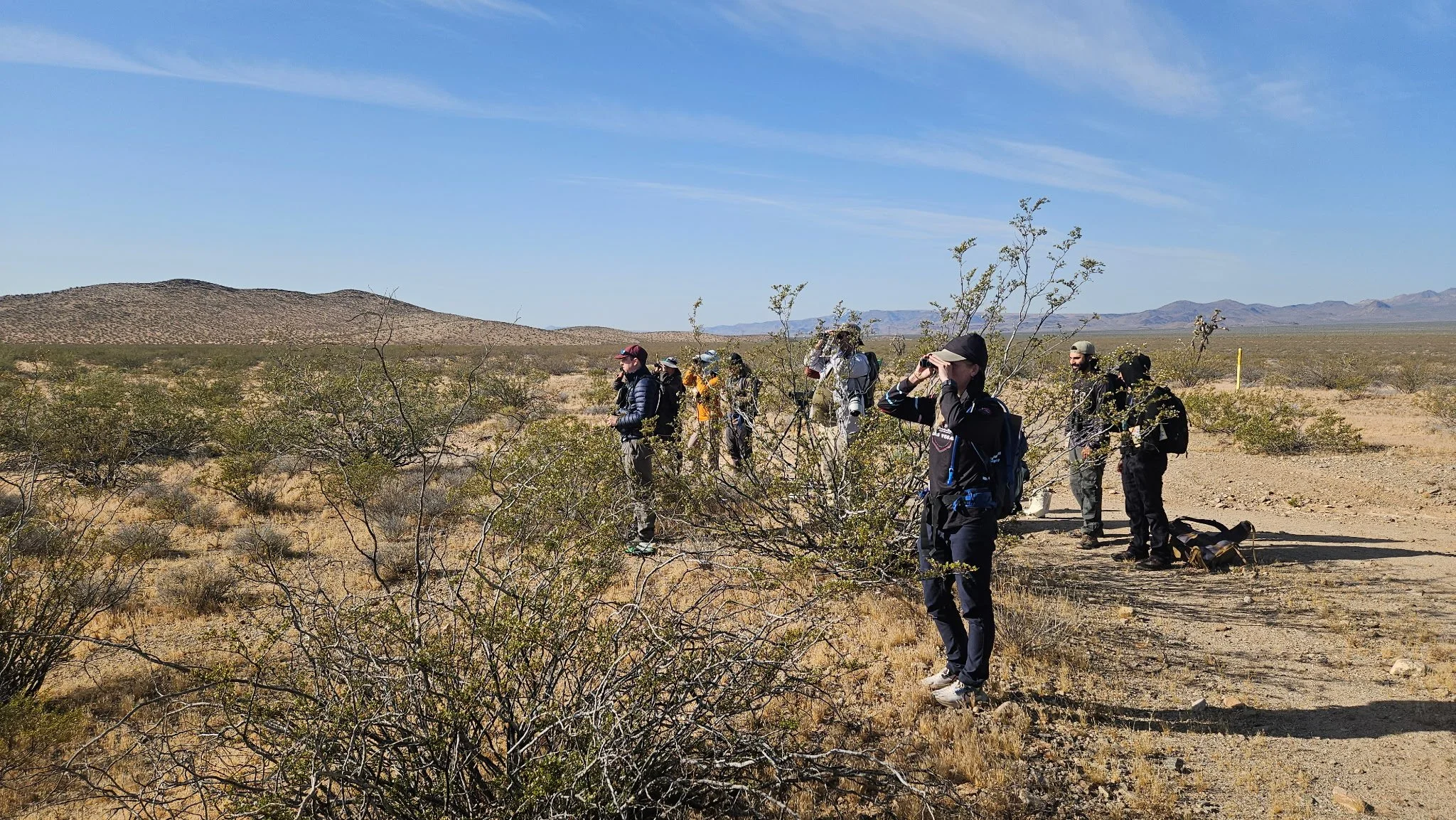
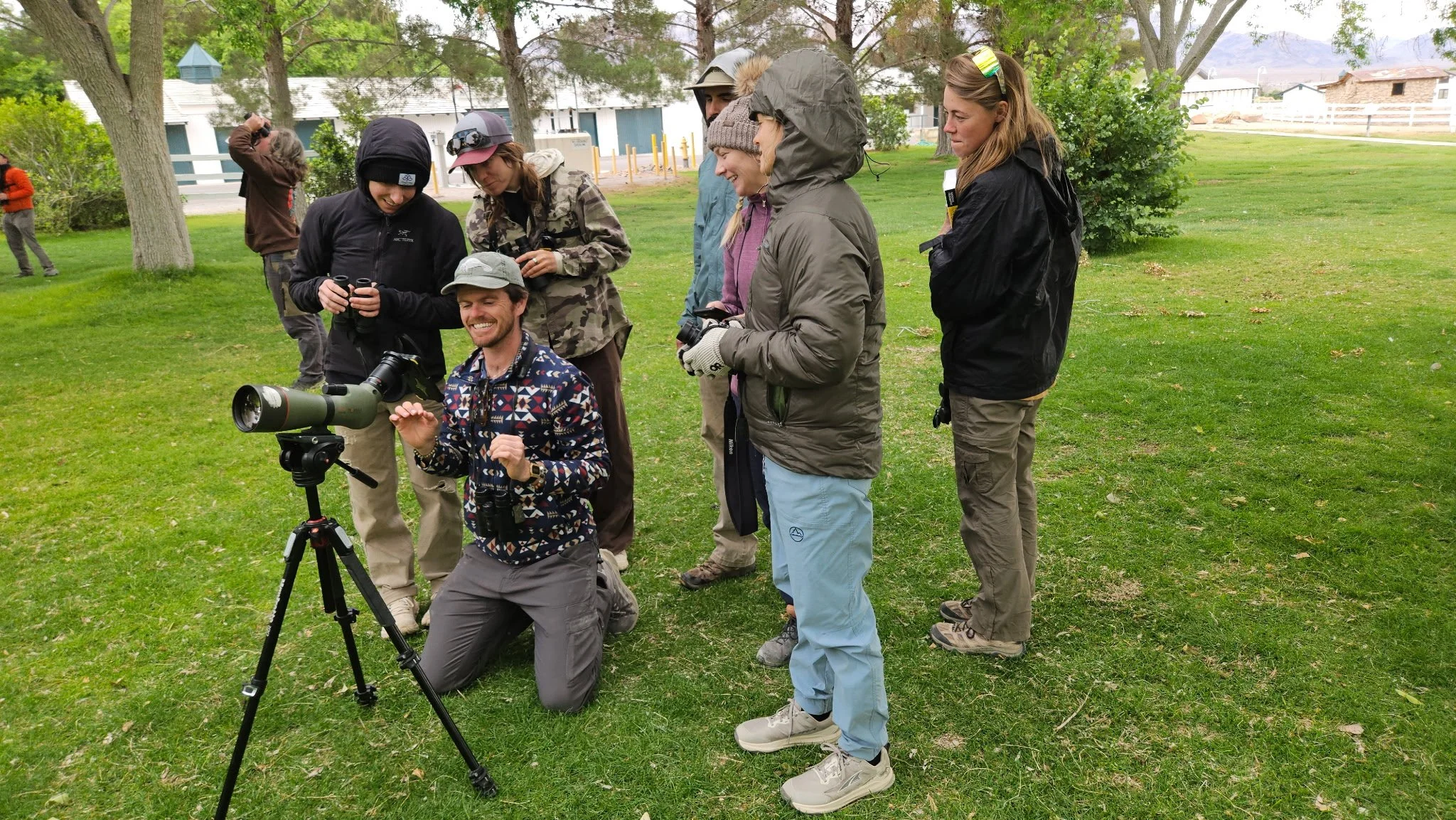
Building these observation skills and getting into the habit of asking the right questions was one of the most important parts of the workshop. Before students opened a field guide, they first had to learn how to observe.
Once they had a general impression of the bird, students used those clues to start working through their field guides.
For a new birder, opening a field guide can feel overwhelming, especially when the bird is small, fast-moving, or hard to describe. Having a few clues already in mind made that process much easier.
Beak shape was one of the biggest clues. A thick, conical beak might point students toward sparrows or finches, while a thinner, more tweezer-like beak could send them toward flycatchers or other insect-eating birds. Long legs, a long tail, overall body shape, and general size also helped narrow down where to look in the guide.
This process helped participants notice the small details they might have missed before the bird flew away. It also helped them become more familiar with the layout of the field guide itself. Getting comfortable with the challenge of finding the bird in the book was part of the learning process.
We had students repeat this same process for 3 days!
Observe first, gather clues, then use the field guide to confirm or narrow down the identification. That repetition is what helped the skills stick. Seeing the same birds more than once, in different light, different positions, and different behaviors helped participants build confidence.
By the end of Day 3, students were moving through their field guides much faster, and many could identify at least 10 new birds by sight, sound, or both.
“Join this course with less than basics and you’ll leave with a fascination for birds, their calls, and the abundant avian habitats that surround Las Vegas.”
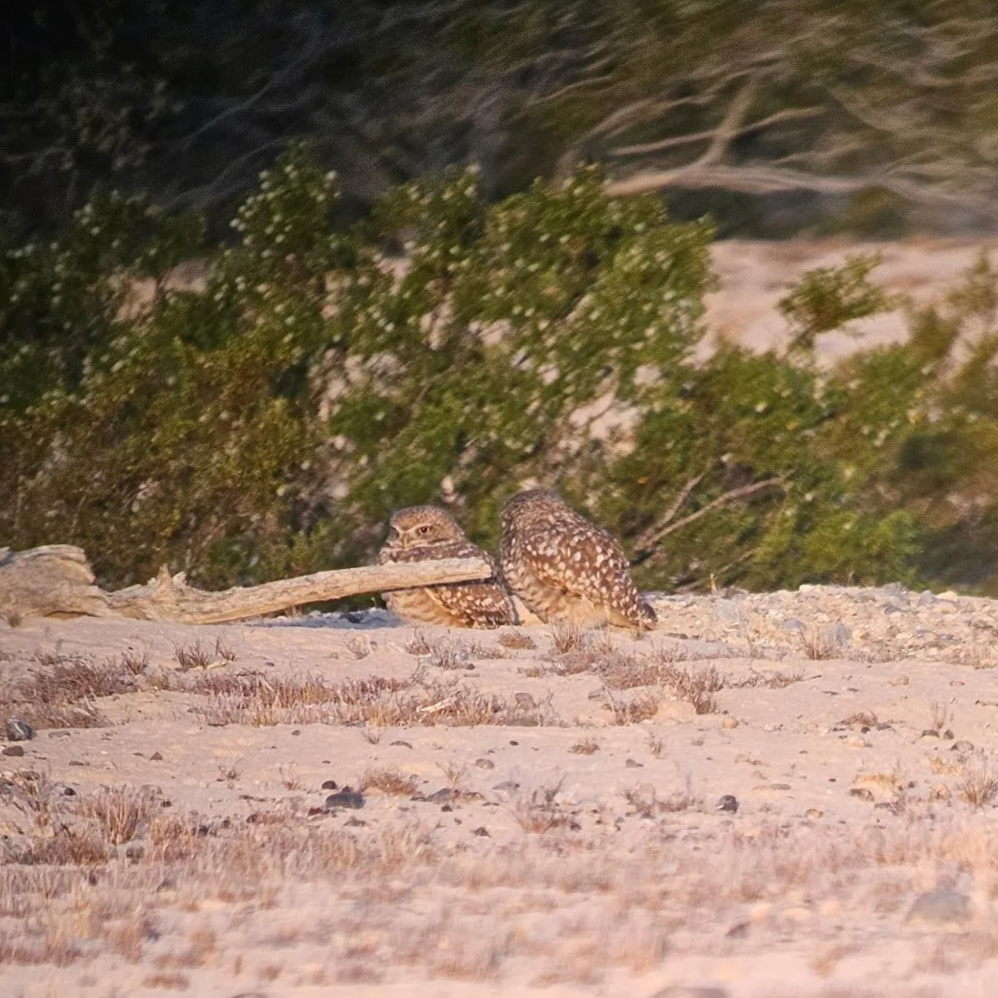
MONITORING TECHNIQUES: Burrowing Owl + Compliance training in the field
During the two workshops, participants also visited Burrowing Owls and learned about their life history, range, migration, nesting, habitat choices, and field signs.
The group discussed what to look for around Burrowing Owl habitat, including pellets, whitewash, burrow condition, and other signs of use. They also covered artificial burrow construction, general agency guidelines, and one-way trapdoor installation considerations.
This was an important part of the training because Burrowing Owls are listed as a sensitive species in California, Nevada and Arizona and observations require careful documentation and agency coordination on project. For avian monitors and compliance biologists, knowing what to look for can help support stronger field notes, better survey data, and more defensible project documentation.
In addition to burrowing owls, we went over nest searching skills with a mock nest searching activity, as well as nest monitoring documentation. We discussed key construction constraints and considerations when monitoring nests, and how to document nest in a defensible way.
We also discussed the foundations for avian monitoring, the migratory bird treaty act and the bald and golden eagle protection act, and how those, along with bird and bat plans, determine what monitoring is required and how the federal and state regulations fit within a project.
“Highly recommend the 3-day avian workshop. Alex’s knowledge was evident, and he provided instruction in an easy-to-absorb way.”
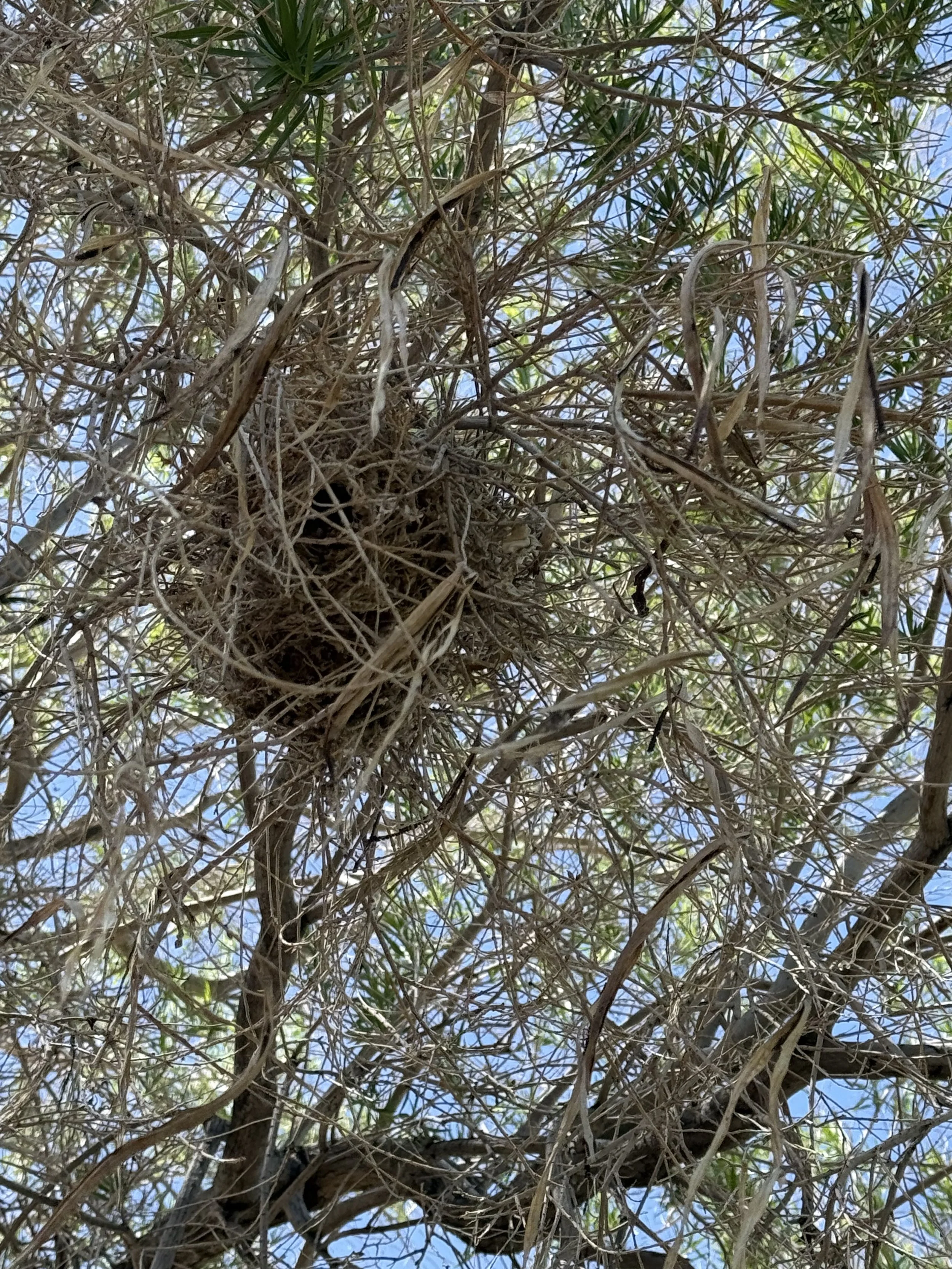
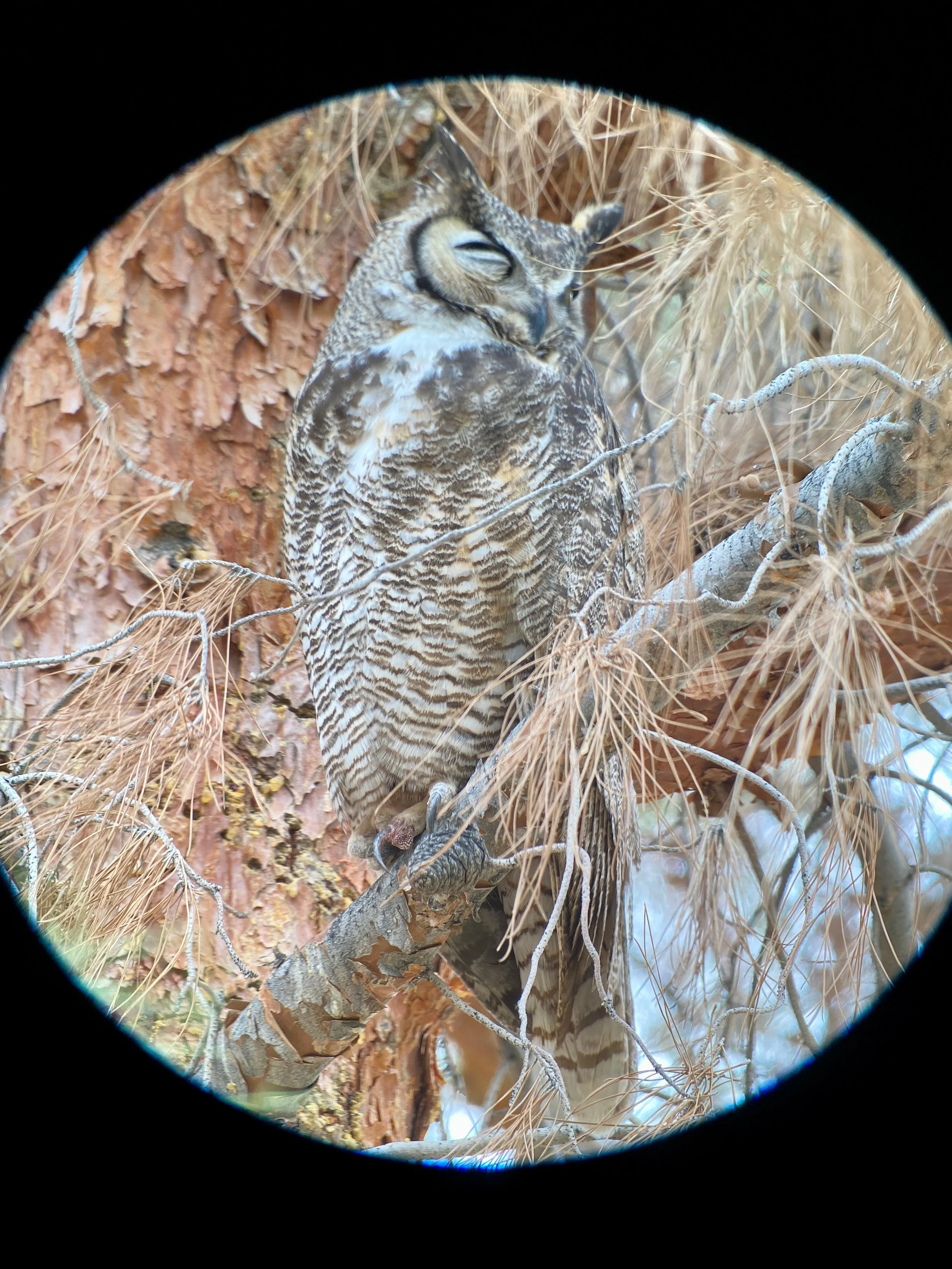
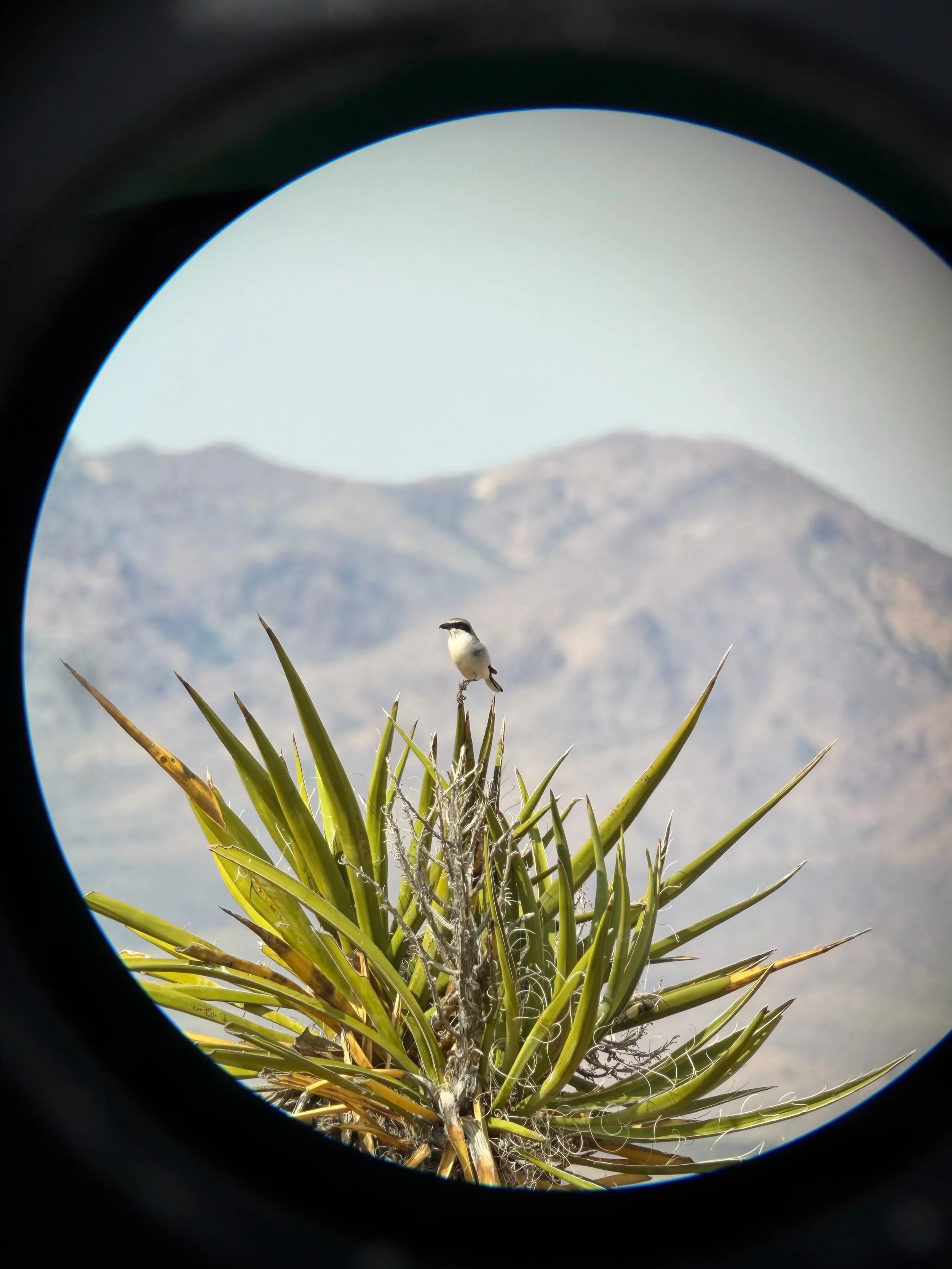
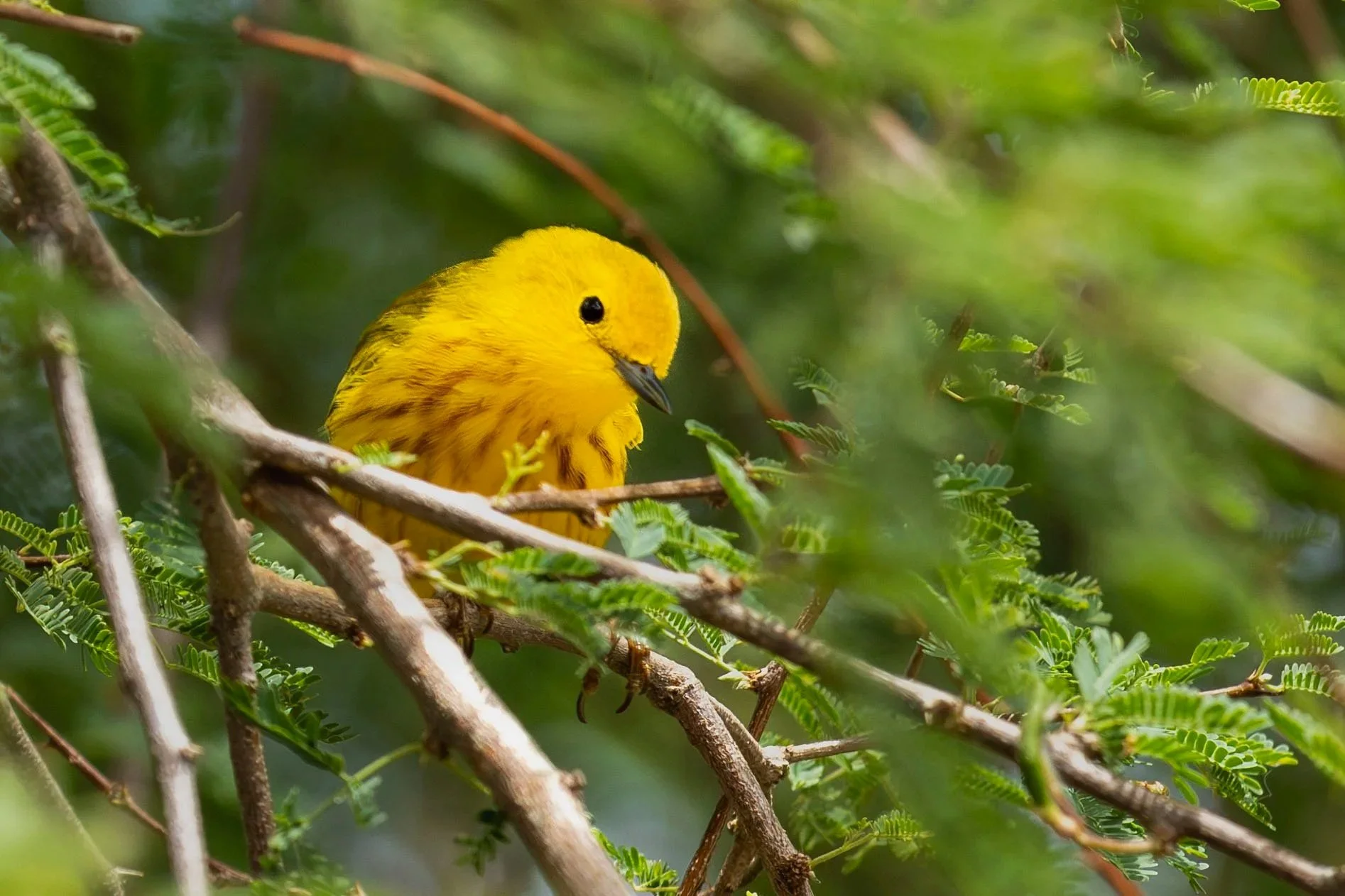
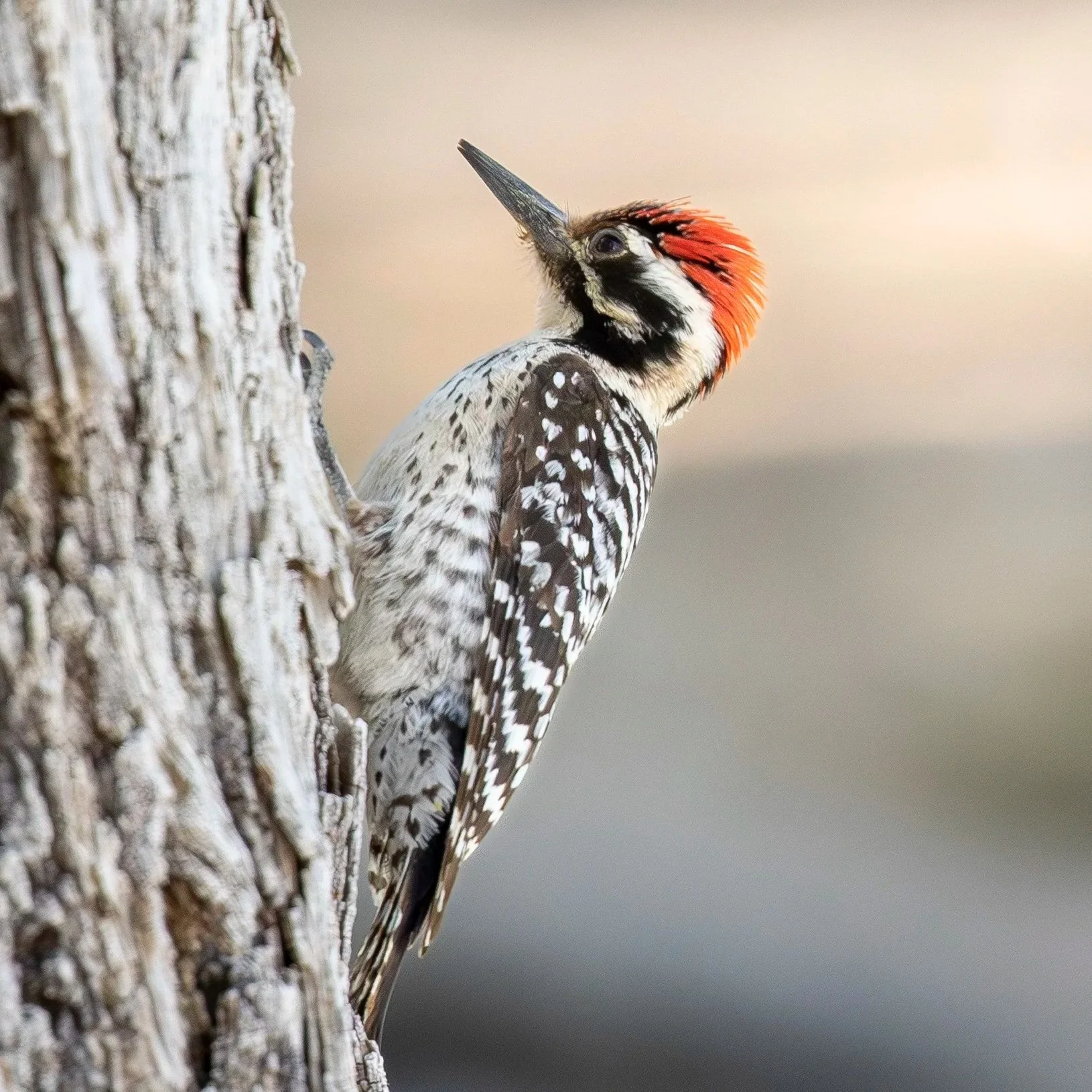
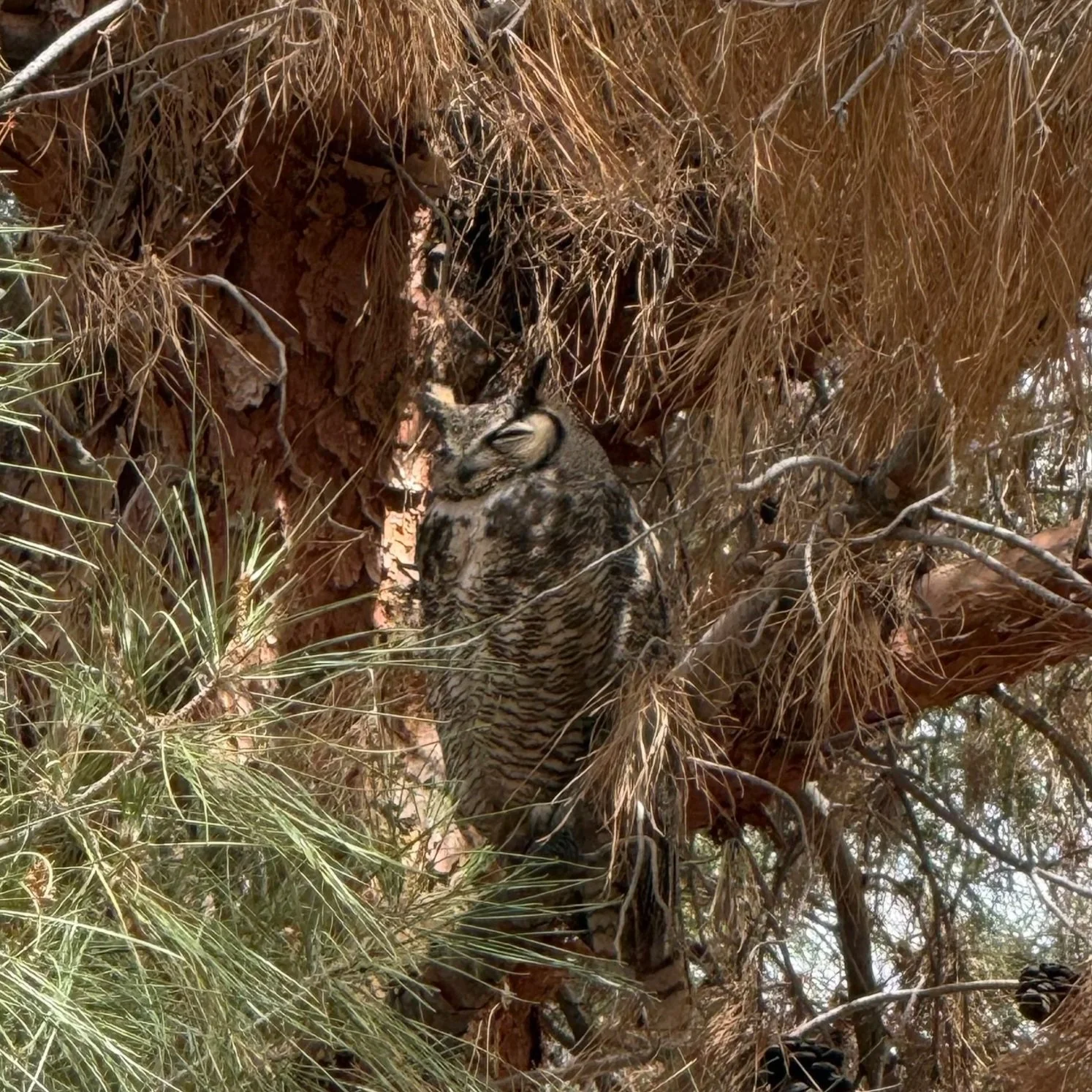
The April 2026 workshop highlights
Across the two April workshops, participants observed 78 bird species. Some of the most exciting sightings included:
Red-shouldered Hawk and nest
Great Horned Owls and nest
Hummingbird hatchlings
Loggerhead Shrikes
Crissal Thrashers
Raven nesting behavior and nest observation
Burrowing Owls, artificial burrowing owl burrows and burrowing owl habitat signs
121 White-faced Ibises migrating overhead
Northern Yellow Warblers
These sightings gave participants real examples of how bird identification, nesting behavior, habitat use, and monitoring documentation come together in the field.
“I feel far more equipped and competent now than I did last week. I look forward to more workshops in the future.”
Need avian specialists or biological monitors for your project?
Desert Shield Environmental Professionals can help support avian monitoring, nesting bird surveys, compliance monitoring, and biological field staffing across the Desert Southwest.
